Discovery of taste receptors in the lungs could help people with asthma breathe easier
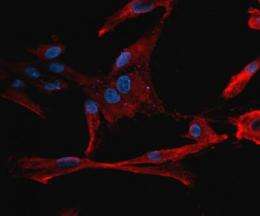
Taste receptors in the lungs? Researchers at the University of Maryland School of Medicine in Baltimore have discovered that bitter taste receptors are not just located in the mouth but also in human lungs. What they learned about the role of the receptors could revolutionize the treatment of asthma and other obstructive lung diseases.
"The detection of functioning taste receptors on smooth muscle of the bronchus in the lungs was so unexpected that we were at first quite skeptical ourselves," says the study's senior author, Stephen B. Liggett, M.D., professor of medicine and physiology at the University of Maryland School of Medicine and director of its Cardiopulmonary Genomics Program.
Dr. Liggett, a pulmonologist, says his team found the taste receptors by accident, during an earlier, unrelated study of human lung muscle receptors that regulate airway contraction and relaxation. The airways are the pathways that move air in and out of the lungs, one of several critical steps in the process of delivering oxygen to cells throughout the body. In asthma, the smooth muscle airways contract or tighten, impeding the flow of air, causing wheezing and shortness of breath.
The taste receptors in the lungs are the same as those on the tongue. The tongue's receptors are clustered in taste buds, which send signals to the brain. The researchers say that in the lung, the taste receptors are not clustered in buds and do not send signals to the brain, yet they respond to substances that have a bitter taste.
For the current study, Dr. Liggett's team exposed bitter-tasting compounds to human and mouse airways, individual airway smooth muscle cells, and to mice with asthma. The findings are published online in Nature Medicine.
Most plant-based poisons are bitter, so the researchers thought the purpose of the lung's taste receptors was similar to those in the tongue – to warn against poisons. "I initially thought the bitter-taste receptors in the lungs would prompt a 'fight or flight' response to a noxious inhalant, causing chest tightness and coughing so you would leave the toxic environment, but that's not what we found," says Dr. Liggett.
There are thousands of compounds that activate the body's bitter taste receptors but are not toxic in appropriate doses. Many are synthetic agents, developed for different purposes, and others come from natural origins, such as certain vegetables, flowers, berries and trees.
The researchers tested a few standard bitter substances known to activate these receptors. "It turns out that the bitter compounds worked the opposite way from what we thought," says Dr. Liggett. "They all opened the airway more profoundly than any known drug that we have for treatment of asthma or chronic obstructive pulmonary disease (COPD)." Dr. Liggett says this observation could have implications for new therapies. "New drugs to treat asthma, emphysema or chronic bronchitis are needed," he says. "This could replace or enhance what is now in use, and represents a completely new approach."
Quinine and chloroquine have been used to treat completely different diseases (such as malaria), but are also very bitter. Both of these compounds opened contracted airways profoundly in laboratory models. Even saccharin, which has a bitter aftertaste, was effective at stimulating these receptors. The researchers also found that administration of an aerosolized form of bitter substances relaxed the airways in a mouse model of asthma, showing that they could potentially be an effective treatment for this disease.
Dr. Liggett cautions that eating bitter tasting foods or compounds would not help in the treatment of asthma. "Based on our research, we think that the best drugs would be chemical modifications of bitter compounds, which would be aerosolized and then inhaled into the lungs with an inhaler," he says.
Another paradoxical aspect of their discovery is the unexpected role that the mineral calcium plays when the lung's taste receptors are activated. The study's principal author, Deepak A. Deshpande, Ph.D., assistant professor of medicine at the University of Maryland School of Medicine, is an expert in how calcium controls muscles. "We always assumed that increased calcium in the smooth muscle cell caused it to contract, but we found that bitter compounds increase calcium and cause relaxation of airway muscle in a unique way," says Dr. Deshpande. "It appears that these taste receptors are wired to a special pool of calcium that is right at the edge of these cells," he says.
"The work of this team exemplifies what it takes to make real improvements in treating certain diseases," says E. Albert Reece, M.D., Ph.D., M.B.A., vice president for medical affairs at the University of Maryland and dean of the University of Maryland School of Medicine. "These researchers were willing to take chances and ask questions about an unlikely concept. Why are taste receptors in the lungs? What do they do? Can we take advantage of them to devise a new therapy? In the end, their discoveries are in the best tradition of scientific research."
More information: Deshpande DA, Wang WCH, McIlmoyle EL, Robinett KS, Schillinger RM, An SS, Sham JSK, Liggett SB. "Bitter taste receptors on airway smooth muscle bronchodilate by localized calcium signaling and reverse obstruction." Nature Medicine. Published online October 24, 2010.


