Promising new 'antigene' therapy
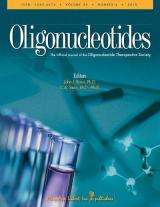
Oligonucleotides, edited by John Rossi, Ph.D., and C.A. Stein, M.D., Ph.D., from the Department of Oncology at Albert Einstein-Montefiore Cancer Center, is an authoritative, peer-reviewed journal published 6 times a year in print and online that focuses on synthetic oligonucleotides, including RNA, DNA, and ribozymes, and their effects on gene expression at the RNA and DNA levels both in vitro and in vivo. It represents a forum for basic research and applied therapeutics for the purpose of developing new concepts and experimental approaches to understanding and modulating gene activity. Oligonucleotides is the official journal of the Oligonucleotide Therapeutics Society (http://www.myots.org). Tables of content and a free sample issue may be viewed online at www.liebertpub.com/oli. Credit: Mary Ann Liebert Inc., publishers
Antigene therapy is a promising new treatment strategy that uses a DNA-based drug to pinpoint light energy to a target gene shutting down its activity. A review article published online ahead of print in Oligonucleotides, a peer-reviewed journal published by Mary Ann Liebert, Inc., details the possibilities and challenges for the clinical application of this novel photo-activated DNA modulating approach.
Netanel Kolevzon and Eylon Yavin, from The Hebrew University of Jerusalem (Israel), describe the mechanism behind antigene therapy in the article "Site-Specific DNA Photocleavage and Photomodulation by Oligonucleotide Conjugates." They review the development of triplex-forming DNA-based drugs capable of up-regulating or inhibiting gene expression in a highly targeted and selective manner.
Unlike existing antisense therapies that target RNA, an antigene drug is a triplex-forming oligonucleotide that recognizes and attaches directly to a specific DNA sequence. By attaching a photoreactive agent to the antigene and delivering light energy to the attachment site, the light-sensitive drug complex becomes activated, triggering a cleavage or cross-linking reaction. This photo-induced, site-specific DNA damage effectively silences the gene target.
"Many obstacles lay ahead before this approach may reach the clinic," caution the authors. However, if antigene therapy proves successful at blocking gene activity, "many diseases that are currently incurable or otherwise treatable with limited success could be potentially relevant targets for such an approach," they conclude.
"This is a clever and potentially powerful approach to targeted regulation of gene expression," says John Rossi, PhD, Co-Editor-in-Chief of Oligonucleotides and Professor in the Department of Molecular Biology, Beckman Research Institute of the City of Hope (Duarte, CA).
More information: The article is available free online at www.liebertpub.com/oli
Provided by Mary Ann Liebert, Inc.
-
From lemons to lemonade: Reaction uses carbon dioxide to make carbon-based semiconductor,
27 comments
-
Every black hole contains a new universe: A physicist presents a solution to present-day cosmic mysteries,
208 comments
-
New silicon memory chip developed,
16 comments
-
Computing experts unveil superefficient 'inexact' chip,
45 comments
-
SpaceX private rocket blasts off for space station (Update),
39 comments
-
Classical and Quantum Mechanics via Lie algebras
Apr 15, 2011
- More from Physics Forums - Independent Research
More news stories
New estimates up dementia rates in mid-income countries
(HealthDay) -- Use of 10/66 dementia diagnosis criteria (10/66) results in an increase in the estimated incidence of dementia in middle-income countries, according to a study published online May 23 in The La ...
Medicine & Health / Alzheimer's disease & dementia
18 minutes ago |
not rated yet |
0
Childhood obesity increases likelihood of a cranial disorder that may cause blindness
Children who are overweight or obese -- particularly older, non-Hispanic white girls -- are more likely to have a neurological disorder known as idiopathic intracranial hypertension, a rare condition that can result in blindness, ...
Medicine & Health / Pediatrics
4 hours ago |
not rated yet |
0
The Goldilocks effect: Babies learn from experiences that are 'just right'
Long before babies understand the story of Goldilocks, they have more than mastered the fairy tale heroine's method of decision-making. Infants ignore information that is too simple or too complex, focusing instead on situations ...
Medicine & Health / Psychology & Psychiatry
11 hours ago |
5 / 5 (4) |
1
|
Color-changing contact lenses to help diabetics (w/ Video)
For the millions of Americans with diabetes, the inconvenient and often painful method of testing blood sugar levels is a way of life. But research and innovative product design by scientists at The University of Akron may ...
17 hours ago |
4.2 / 5 (5) |
3
|
Stem-cell-growing surface enables bone repair
University of Michigan researchers have proven that a special surface, free of biological contaminants, allows adult-derived stem cells to thrive and transform into multiple cell types. Their success brings stem cell therapies ...
Medicine & Health / Medical research
13 hours ago |
5 / 5 (7) |
1
|
Yahoo seeks to shake up search, Web browsing
(AP) -- Joining the battle to redefine Internet search, Yahoo is taking aim with a new browser enhancement it calls "Axis."
Forensic sleuth probes fate of royal lovers and lion hearts
The French media like to call him the "Indiana Jones of the graveyards", but perhaps a better tag would be the Sherlock Holmes of forensic science.
Deep sea animals stowaway on submarines and reach new territory
Marine scientists studying life around deep-sea vents have discovered that some hardy species can survive the extreme change in pressure that occurs when a research submersible rises to the surface. The team's ...
Good vibes: Coupling electron spin states and carbon nanotube vibrations
(Phys.org) -- An electron’s spin is separate from its motion, and is suitable for use in both highly-precise magnetic sensing as well as a qubit in quantum computing. Recently, scientists at the University ...
New inexpensive, environmentally friendly solar cell shines with potential
The limitations of conventional and current solar cells include high production cost, low operating efficiency and durability, and many cells rely on toxic and scarce materials. Northwestern University researchers have developed ...