Scientists develop worm EEG to test the effects of drugs
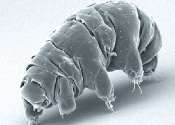
Scientists from the University of Southampton have developed a device which records the brain activity of worms to help test the effects of drugs.
New research from North Carolina State University and the University of Colorado shows that households with dogs are home to more types of bacteria – including bacteria that are rarely found in households ...
About 55.5 million years ago, geologically rapid emission of a large volume of greenhouse gases at the Paleocene-Eocene boundary (PETM) led to global warming of about 5oC, severe ocean acidification, and ...
One of the basic principles of nanotechnology is that when you make things extremely small—one nanometer is about five atoms wide, 100,000 times smaller than the diameter of a human hair—they are going ...
A UK-Canadian team of scientists has discovered ancient pockets of water, which have been isolated deep underground for billions of years and contain abundant chemicals known to support life.
Whether in vehicle transmissions, hip replacements, or tiny sensors for triggering airbags: The respective components must slide against each other with minimum friction to prevent loss of energy and material ...
(Phys.org) —Just a few drops of liquid or a bit more is run past specialized sensors in microfluidic devices to detect chemicals of concern to doctors and security personnel. However, these devices are ...
Microscopic algae that live within reef-forming corals scoop up available nitrogen, store the excess in crystal form, and slowly feed it to the coral as needed, according to a study published in mBio, the online open-access journa ...
One of the most promising new kinds of battery to power electric cars is called a lithium-air battery, which could store up to four times as much energy per pound as today's best lithium-ion batteries. But ...
From microscopes to MRI scanners, imaging technology is growing ever more vital in the world's hospitals, whether for the diagnosis of illness or for research into new cures. Imaging technology requires dyes ...
A small piece of paper sticks to an electrically charged plastic ruler. The principle of this simple classroom physics experiment is applied at the microscopic scale by so-called optical tweezers to get the likes of polystyrene ...
It may be easier to show concern about cuddly animals like bees than about some of the millions of indigenous insect and microorganisms found in the European biodiversity.
(Phys.org) —The new material's artificial "atoms" are designed to work with a broad range of light frequencies. With adjustments, the researchers believe it could lead to perfect microscope lenses or invisibility ...
Take a swab of saliva from your mouth and within minutes your DNA could be ready for analysis and genome sequencing with the help of a new device.