News tagged with invasive plants
Research finds autumn advantage for invasive plants in Eastern United States
Much like the fabled tortoise and the hare, the competition between native and invasive plants growing in deciduous forests in the Eastern United States is all about how the plants cross the finish line in autumn.
Apr 25, 2012 |
not rated yet |
1
|
Fertilization by invasive species threatens nutrient-poor ecosystems
They can estimate whether native plants in the neighbourhood of invasive species incorporate the nitrogen fixed by the latter. The biologists examined the Sydney Golden Wattle (Acacia longifolia), an Australian shrub that ...
Mar 13, 2012 |
5 / 5 (1) |
0
Research team shows people are carrying invasive seeds to Antarctica
(PhysOrg.com) -- When thinking of invasive plants taking hold in a new environment, not many people would think of Antarctica; it’s cold and hostile and there aren’t many types of plants that could ...
Supreme Court rejects emergency carp measures
(AP) -- The U.S. Supreme Court refused Monday to order emergency measures that might prevent Asian carp from reaching the Great Lakes, despite a warning that the exotic fish pose a "dire threat" to the region's ...
Feb 27, 2012 |
5 / 5 (3) |
2
Human population the primary factor in exotic plant invasions in the United States
Extensive ongoing research on biotic invasions around the world constantly increases data availability and improves data quality. New research in the United States shows how using improved data from previous ...
Feb 23, 2012 |
5 / 5 (1) |
0
US Forest Service research used in new, invasive-plant software
U.S. Forest Service research and funding have led to the development of a free software application that will help people identify and control destructive invasive plants in Southern forests and grasslands.
Feb 22, 2012 |
not rated yet |
0
Invasive plant protects Australian lizards from invasive toad
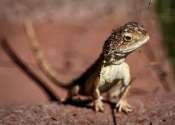
An invasive plant may have saved an iconic Australian lizard species from death at the hands of toxic cane toads, according to research published in the March issue of The American Naturalist. It's an int ...
Feb 22, 2012 |
4.7 / 5 (3) |
3
Repelling the knapweed invasion
The problem of invasive species may seem remote from most people's lives. But in some parts of the United Kingdom, an invasive plant creates a problem that hits home, literally. That's because the presence of invasive knotweed ...
Feb 19, 2012 |
4 / 5 (1) |
0
New insights into invasive plant management
Over a decade of research at the U.S. Department of Agriculture (USDA) has resulted in the development of a new matrix for invasive plant management. The model was created by scientists with the Agricultural ...
Feb 06, 2012 |
5 / 5 (1) |
0
Exotic plants do not necessarily become invasive
Introduced plant species do not necessarily have to outgrow indigenous plant species. That makes it difficult to predict the potential harm of exotic plants. NWO-funded researcher Annelein Meisner recently published an article ...
Dec 19, 2011 |
not rated yet |
0
Thanksgiving in space may one day come with all the trimmings
(PhysOrg.com) -- Future astronauts spending Thanksgiving in space may not have to forgo one of the most traditional parts of the day's feast: fresh sweet potatoes.
Space & Earth / Space Exploration
Nov 21, 2011 |
5 / 5 (1) |
0
Gypsies, graveyards and mysterious plants
A U.S. Department of Agriculture (USDA) scientist has confirmed the identity of a strange grass-like sedge discovered in a Mississippi graveyard, and believes the appearance of the potentially invasive plant is linked to ...
Oct 19, 2011 |
4.5 / 5 (2) |
0
Foreign insects, diseases got into US
(AP) -- Dozens of foreign insects and plant diseases slipped undetected into the United States in the years after 9/11, when authorities were so focused on preventing another attack that they overlooked a ...
Oct 10, 2011 |
5 / 5 (3) |
0
'Non-invasive' cultivar? Buyer beware
Cultivars of popular ornamental woody plants that are being sold in the United States as non-invasive are probably anything but, according to an analysis by botanical researchers published in the October issue of BioScience. Tiffan ...
Oct 07, 2011 |
5 / 5 (1) |
0
Digital panoramas of rangelands could be rich source of research data
A scientist at the U.S. Department of Agriculture (USDA) is exploring how rangeland ecologists could use high-resolution digital panoramas to track landscape changes.
Sep 20, 2011 |
5 / 5 (1) |
0
Invasive species
Invasive species is a phrase with several definitions. The first definition expresses the phrase in terms of non-indigenous species (e.g. plants or animals) that adversely affect the habitats they invade economically, environmentally or ecologically. It has been used in this sense by government organizations as well as conservation groups such as the IUCN (International Union for Conservation of Nature).
The second definition broadens the boundaries to include both native and non-native species that heavily colonize a particular habitat.
The third definition is an expansion of the first and defines an invasive species as a widespread non-indigenous species. This last definition is arguably too broad as not all non-indigenous species necessarily have an adverse effect on their adopted environment. An example of this broader use would include the claim that the common goldfish (Carassius auratus) is invasive. Although it is common outside its range globally, it almost never appears in harmful densities.
Because of the ambiguity of its definition, the phrase invasive species is often criticized as an imprecise term within the field of ecology. This article concerns the first two definitions; for the third, see introduced species.
For more information about Invasive species, read the full article at
Wikipedia.
This text uses material from Wikipedia and is available under the GNU Free Documentation License.