NASA's NEOWISE extends legacy with decade of near-Earth object data
As the infrared space telescope continues its long-duration survey of the universe, it is creating a unique resource for future astronomers to make new discoveries.

As the infrared space telescope continues its long-duration survey of the universe, it is creating a unique resource for future astronomers to make new discoveries.
Astronomy
Apr 5, 2024
0
43

An international team of astronomers and astrophysicists has confirmed the first known observance of a tidally locked super-Earth exoplanet. In their paper published in The Astrophysical Journal, the group describes the unique ...
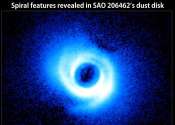
Planets form in disks of dust and gas called protoplanetary disks that whirl around a central protostar during its final assembly. Although several dozens of such disks have been imaged, just two planets have been caught ...
Planetary Sciences
Mar 27, 2024
1
546
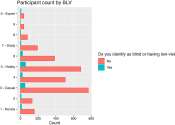
When you travel somewhere where they speak a language you can't understand, it's usually important to find a way to translate what's being communicated to you. In some ways, the same can be said about scientific data collected ...
Astronomy
Mar 25, 2024
0
27

An international team of astronomers has used the James Webb Space Telescope (JWST) to conduct mid-infrared observations of a nearby supernova known as SN 1987A. Results of the observational campaign, published February 21 ...

Fifty-eight days ago, on a nearly windless morning on the Ross Ice Shelf, a stadium-size balloon took flight above Antarctica, carrying with it far infrared technology from the University of Arizona's Steward Observatory ...
Astronomy
Feb 26, 2024
0
26

From enraptured voles and space robots on the moon to brain gears and dense objects, it was a heck of a week in science. Let's take a look at some of the most interesting developments over the past seven days.

A team of astronomers, led by Arizona State University Assistant Research Scientist Tim Carleton, has discovered a dwarf galaxy that appeared in James Webb Space Telescope imaging that wasn't the primary observation target.
Astronomy
Feb 2, 2024
4
906

On 4 February, asteroid 2011 MD will make its closest approach to the Earth. Though it will not be visible with the naked eye, the asteroid will pass 15,000,000 km away from Earth—much closer than those in the asteroid ...
Astronomy
Feb 2, 2024
0
62

Columbia researchers analyzing images from NASA's James Webb Space Telescope have found that galaxies in the early universe are often flat and elongated, like breadsticks—and are rarely round, like balls of pizza dough.
Astronomy
Jan 17, 2024
7
125
