Ancient DNA and bones reveal species on the move as a result of climate changes thousands of years ago
By analyzing DNA and studying old animal bones, researchers have been able to reconstruct the animal diversity from a cave in Nordland, Norway.

By analyzing DNA and studying old animal bones, researchers have been able to reconstruct the animal diversity from a cave in Nordland, Norway.
Paleontology & Fossils
Apr 5, 2024
0
83
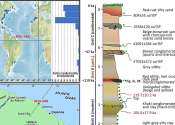
In what is an intriguing mix of past and future, an international team of researchers, including some from the University of Bonn, has stumbled upon a surprising window to the past in Kourou in French Guiana. In the clay ...
Paleontology & Fossils
Mar 26, 2024
0
195

Barrow Island, located 60 kilometers off the Pilbara in Western Australia, was once a hill overlooking an expansive coast. This was the northwestern shelf of the Australian continent, now permanently submerged by the ocean.
Archaeology
Mar 25, 2024
0
141

As the austral summer draws to a close, we are preparing to fly over the Southern Alps to survey glaciers. This annual flight supports the longest scientific study of Aotearoa New Zealand's icescapes—and it shows that all ...
Earth Sciences
Mar 6, 2024
0
5

Researchers at the University of Copenhagen have concluded that the methane uptake in dry landscapes exceeds methane emissions from wet areas across the ice-free part of Greenland. The results of the new study contribute ...
Earth Sciences
Jan 31, 2024
0
30

Pollen can help scientists track changes in vegetation through time, as they respond to moderations of the climate, be that glaciation or deglaciation with transitions into and out of ice ages. Furthermore, it can help elucidate ...

Most things you eat grew in soil or ate plants growing in soil. We don't think much about it, but soil is essential to life.
Biotechnology
Jan 29, 2024
0
8

A team of scientists led by a Tulane University oceanographer has found that deposits deep under the ocean floor reveal a way to measure the ocean oxygen level and its connections with carbon dioxide in the Earth's atmosphere ...
Earth Sciences
Jan 19, 2024
37
506

For much of the 65,000 years of Australia's human history, the now-submerged northwest continental shelf connected the Kimberley and western Arnhem Land. This vast, habitable realm covered nearly 390,000 square kilometers, ...
Archaeology
Dec 23, 2023
0
133

Earthworms are revered for the way they nourish healthy soils, and scientific evidence validates the affection gardeners feel for these industrious invertebrates. Nevertheless, research has shown that our soil-dwelling friends ...
Plants & Animals
Nov 14, 2023
0
1
The general term "ice age" or, more precisely, "glacial age" denotes a geological period of long-term reduction in the temperature of the Earth's surface and atmosphere, resulting in an expansion of continental ice sheets, polar ice sheets and alpine glaciers. Within a long-term ice age, individual pulses of extra cold climate are termed "glaciations". Glaciologically, ice age implies the presence of extensive ice sheets in the northern and southern hemispheres; by this definition we are still in an ice age (because the Greenland and Antarctic ice sheets still exist).
More colloquially, when speaking of the last few thousand years, "the" ice age refers to the most recent colder period (or freezing period) with extensive ice sheets over the North American and Eurasian continents: in this sense, the most recent ice age peaked, in its Last Glacial Maximum about 20,000 years ago. This article will use the term ice age in the former, glaciological, sense: glacials for colder periods during ice ages and interglacials for the warmer periods.
This text uses material from Wikipedia, licensed under CC BY-SA
