New material to soak up oil spills?
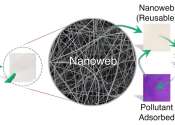
Scientists said Tuesday they had manufactured a lightweight and reusable material that can absorb up to 33 times its weight in certain chemicals—a possible new tool against water pollution.
A team of geoscientists from Southwest Research Institute (SwRI) using newly available remote-sensing technology has achieved unprecedented detail in quantifying subtle, long-period changes in the water levels of shallow ...
DOE's Savannah River National Laboratory, in partnership with Ford Motor Company, the University of California-Berkeley, and BASF, has research underway to explore an innovative low-pressure material-based ...
(Phys.org)—Sulfur compounds in petroleum fuels have met their nano-structured match. University of Illinois researchers developed mats of metal oxide nanofibers that scrub sulfur from petroleum-based fuels ...
(Phys.org)—A seamless graphene/nanotube hybrid created at Rice University may be the best electrode interface material possible for many energy storage and electronics applications.
(Phys.org)—Northwestern University researchers have broken a world record by creating two new synthetic materials with the greatest amount of surface areas reported to date.
EU researchers extensively characterised the self-organisation of nanotubes and developed novel compositions particularly appropriate to solar energy conversion applications.
A new type of hybrid material developed at the University of California, Berkeley, could help oil and chemical companies save energy and money and lower their environmental impacts by eliminating ...
National Physical Laboratory scientists have developed an innovative fuel cell reference electrode that has been used to map changes in electrode potential inside a working polymer electrolyte membrane (PEM) ...
Scientists in Japan have solved a long-standing veterinary mystery: how dogs can stand and walk for so long on snow and ice without apparent discomfort, and without freezing their paws.
Zeolites are porous materials with perfectly regular pores and high surface area that can act as molecular sieves. This property has led to important applications including the purification of air or water such as the contaminated ...
After spending more than 240 days "sailing" around the Earth, NASA's NanoSail-D -- a nanosatellite that deployed NASA's first-ever solar sail in low-Earth orbit -- has successfully completed its Earth orbiting ...
If you were to look at a carbon nanotube with the naked eye you wouldn't see much more than black powder, but now a team of EU-funded scientists has developed a novel way of making these multi-purpose nanotechnology ...
(PhysOrg.com) -- A tough, hard-working particle known as ZIF-8 that can selectively remove carbon dioxide from a complex mixture of gases was designed by scientists at Pacific Northwest National Laboratory. ...