H5N1 strain of bird flu found in milk: WHO
The H5N1 bird flu virus strain has been detected in very high concentrations in raw milk from infected animals, the WHO said Friday, though how long the virus can survive in milk is unknown.

The H5N1 bird flu virus strain has been detected in very high concentrations in raw milk from infected animals, the WHO said Friday, though how long the virus can survive in milk is unknown.
Veterinary medicine
10 hours ago
0
29

Anticipating changes to ecosystems is often at best an educated guess, but what if there was a way to better tune into possible changes occurring?
Plants & Animals
Apr 18, 2024
0
14

Migration and reproduction are two of the most demanding events in a bird's annual cycle, so much so that the vast majority of migratory birds separate the two tasks into different times of the year.
Plants & Animals
Apr 18, 2024
0
5

The confirmed presence of bird flu in American dairy cattle in a March 25 report from the U.S. Department of Agriculture (USDA)—and a case in Texas where a human working with cattle was infected—has put Canadian public ...
Veterinary medicine
Apr 18, 2024
0
12
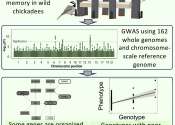
Lost your keys? Can't remember where you parked the car? If only you had the memory of a mountain chickadee.
Plants & Animals
Apr 17, 2024
0
83

The technology used to sequence SARS-CoV-2 at record speed early in the COVID-19 pandemic has been successfully tested as a technique to monitor arboviruses and diseases transmitted mainly by mosquitoes.
Biotechnology
Apr 17, 2024
0
8

Every spring, hundreds of thousands of birds leave their winter habitat on Poyang, the largest freshwater lake in China, and fly north over the most densely populated region on Earth to reach their breeding grounds in Siberia. ...
Plants & Animals
Apr 17, 2024
0
17

Health officials around the globe, including the Centers for Disease Control and Prevention and the European Center for Disease Control and Prevention, are monitoring the ongoing avian influenza outbreak. Also known as bird ...
Plants & Animals
Apr 16, 2024
0
3

Spring bird migration has begun. Under cover of darkness, 2.5–3.5 billion birds will fly northward to their breeding grounds in the United States and Canada. According to the Cornell Lab of Ornithology, now is one of the ...
Plants & Animals
Apr 16, 2024
0
24

As part of a team of ecologists, I've been studying aspects of great tit biology at Wytham Woods near Oxford. One aspect of our research is how climate change affects their breeding behavior. So far, our research suggests ...
Plants & Animals
Apr 15, 2024
0
9
About two dozen - see section below
Birds (class Aves) are winged, bipedal, endothermic (warm-blooded), vertebrate animals that lay eggs. There are around 10,000 living species, making them the most numerous tetrapod vertebrates. They inhabit ecosystems across the globe, from the Arctic to the Antarctic. Birds range in size from the 5 cm (2 in) Bee Hummingbird to the 2.7 m (8 ft 10 in) Ostrich. The fossil record indicates that birds evolved from theropod dinosaurs during the Jurassic period, around 150–200 Ma (million years ago), and the earliest known bird is the Late Jurassic Archaeopteryx, c 155–150 Ma. Most paleontologists regard birds as the only clade of dinosaurs that survived the Cretaceous–Tertiary extinction event approximately 65.5 Ma.
Modern birds are characterised by feathers, a beak with no teeth, the laying of hard-shelled eggs, a high metabolic rate, a four-chambered heart, and a lightweight but strong skeleton. All birds have forelimbs modified as wings and most can fly, with some exceptions including ratites, penguins, and a number of diverse endemic island species. Birds also have unique digestive and respiratory systems that are highly adapted for flight. Some birds, especially corvids and parrots, are among the most intelligent animal species; a number of bird species have been observed manufacturing and using tools, and many social species exhibit cultural transmission of knowledge across generations.
Many species undertake long distance annual migrations, and many more perform shorter irregular movements. Birds are social; they communicate using visual signals and through calls and songs, and participate in social behaviours including cooperative breeding and hunting, flocking, and mobbing of predators. The vast majority of bird species are socially monogamous, usually for one breeding season at a time, sometimes for years, but rarely for life. Other species have breeding systems that are polygynous ("many females") or, rarely, polyandrous ("many males"). Eggs are usually laid in a nest and incubated by the parents. Most birds have an extended period of parental care after hatching.
Many species are of economic importance, mostly as sources of food acquired through hunting or farming. Some species, particularly songbirds and parrots, are popular as pets. Other uses include the harvesting of guano (droppings) for use as a fertiliser. Birds figure prominently in all aspects of human culture from religion to poetry to popular music. About 120–130 species have become extinct as a result of human activity since the 17th century, and hundreds more before then. Currently about 1,200 species of birds are threatened with extinction by human activities, though efforts are underway to protect them.
This text uses material from Wikipedia, licensed under CC BY-SA
