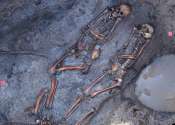
Aztec conquest altered genetics among early Mexico inhabitants, new DNA study shows
Did different species of early humans interbreed and produce offspring of mixed ancestry?
(Phys.org)—Patricia Ann Kramer, professor of anthropology at the University of Washington, has found that the walking gait between two of our early ancestors was likely so different that it's doubtful they ...
Have you ever heard an opera singing ape? Researchers in Japan have discovered that singing gibbons use the same vocal techniques as professional soprano singers. The study, published in the American Journal of Physical An ...
Poor mothers will invest more resources in daughters, who stand a greater chance of increasing their status through marriage than do sons, suggests a study in the American Journal of Physical Anthropology.
Two studies led by scientists from the University of Pennsylvania and National Geographic's Genographic Project reveal new information about the migration patterns of the first humans to settle the Americas. The studies identify ...
The first study into rarely documented ground-nest building by wild chimpanzees offers new clues about the ancient transition of early hominins from sleeping in trees to sleeping on the ground. While most ...
What can surnames tell us about the culture, genetics and history of our society? That is the question being answered by Chinese researchers who have traced the evolution of surnames across China.The research, published in ...
Salt beef, sea biscuits and the occasional weevil; the food endured by sailors during the Napoleonic wars is seldom imagined to be appealing. Now a new chemical analysis technique has allowed archaeologists ...
(PhysOrg.com) -- Johns Hopkins researchers have identified the first ankle and toe bone fossils from the earliest North American true primate, which they say suggests that our earliest forerunners may have dwelled or moved ...
How modern-day humans dispersed on the planet and the pace of civilization-changing technologies that accompanied their migrations are enduring mysteries. Scholars believe ancient peoples on Europe and Asia moved primarily ...
Endocasts are the most direct evidence for studying human brain evolution. Endocasts can provide information on brain size, general shape, morphology, and anatomical features of the external surface. Dr. WU ...
Eight small teeth found in a cave near Rosh Haain, central Israel, are raising big questions about the earliest existence of humans and where we may have originated, says Binghamton University anthropologist ...
Nearly 10,000 years ago, man's best friend provided protection and companionship - and an occasional meal. That's what researchers are saying after finding a bone fragment from what they are calling the earliest ...