Biosensor sniffs out explosives
May 08, 2007
Biosensor sniffs out explosives
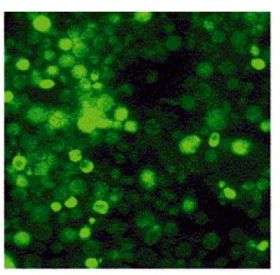
When the biosensor detects DNT, it lights up green. Credit: D. Dhanasekaran

Temple University School of Medicine researchers have developed a new biosensor that sniffs out explosives and could one day be used to detect landmines and deadly agents, such as sarin gas, according to a paper in the June issue of Nature Chemical Biology.

To create the biosensor, Danny Dhanasekaran and colleagues genetically engineered a yeast strain with mammalian (rat) olfactory signaling machinery and genetically linked it to the expression of green fluorescent protein. Into these yeast cells, they cloned individual rat olfactory receptors. When the olfactory receptor "smells" the odor of DNT, an ingredient in the explosive TNT, the biosensor turns fluorescent green. The research team is the first to identify, clone and sequence this novel olfactory receptor.

"We suspected that harnessing the potential of the olfactory system, which can detect innumerable chemical agents with unparalleled sensitivity and selectivity, would be of immense value in the detection of environmental toxins and chemical warfare agents even at sublethal levels," said Dhanasekaran, Associate Professor of Biochemistry at Temple’s Fels Institute for Cancer Research and Molecular Biology.

The research team is now perfecting the utility of the biosensor, for example, its response time, and believes that the potential therapeutic applications extend beyond the detection of chemical agents.

"With further genetic fine-tuning of the olfactory receptor pathway, this system could also be used to screen experimental medications, a crucial step in the development of new drugs," said Dhanasekaran.

Biosensors, which are made from natural ingredients, are preferable to man-made sensors, which can be expensive, cumbersome and inflexible. Dhanasekaran envisions that the biosensor will soon be incorporated into a handheld device or a remote device that can be left at a location and monitored from afar.

Source: Temple University

Explore further: Making ice-cream more nutritious with meat left-overs

add to favorites email to friend print save as pdf

Related Stories

Recommended for you

Making ice-cream more nutritious with meat left-overs

3 hours ago

Food industries are now turning meat left-over into high-protein content ingredients for food supplements, or to be added to processed food. But a EU-wide regulation covering them is still lacking.

Non-wetting fabric drains sweat

18 hours ago

(Phys.org) —Waterproof fabrics that whisk away sweat could be the latest application of microfluidic technology developed by bioengineers at the University of California, Davis.

Protein study suggests drug side effects are inevitable

20 hours ago

A new study of both computer-created and natural proteins suggests that the number of unique pockets – sites where small molecule pharmaceutical compounds can bind to proteins – is surprisingly small, meaning drug side ...

Attacking MRSA with metals from antibacterial clays

May 17, 2013

In the race to protect society from infectious microbes, the bugs are outrunning us. The need for new therapeutic agents is acute, given the emergence of novel pathogens as well as old foes bearing heightened antibiotic resistance.

User comments : 0

More news stories

Protein study suggests drug side effects are inevitable

A new study of both computer-created and natural proteins suggests that the number of unique pockets – sites where small molecule pharmaceutical compounds can bind to proteins – is surprisingly small, meaning drug side ...

Non-wetting fabric drains sweat

(Phys.org) —Waterproof fabrics that whisk away sweat could be the latest application of microfluidic technology developed by bioengineers at the University of California, Davis.

Beautiful 'flowers' self-assemble in a beaker

By simply manipulating chemical gradients in a beaker of fluid, materials scientists at Harvard have found that they can control the growth behavior of crystals to create precisely tailored structures—such ...

Attacking MRSA with metals from antibacterial clays

In the race to protect society from infectious microbes, the bugs are outrunning us. The need for new therapeutic agents is acute, given the emergence of novel pathogens as well as old foes bearing heightened antibiotic resistance.

NGOs denounce Malaysia hydropower meeting

Three dozen Malaysian NGOs on Tuesday denounced the world hydroelectric industry's decision to hold a conference in a Borneo state where dam projects have uprooted forests and native peoples.