An X-ray Time Machine?
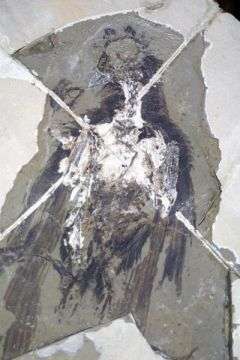
There's nothing new about using x-rays to look at bones. But using them on bones a hundred million years old is another story. This week, a team of researchers visiting SSRL is finding that when it comes to ancient fossils and bones locked in stone, x-rays may be revolutionizing the science of paleontology.
Fossilized remains of birds, sharks, squid and other ancient creatures contain far more than the flat, skeletal traces visible to the eye, according to materials scientist Bob Morton. Almost 20 years ago, Morton came up with the idea of using x-rays to map the invisible chemistry hidden within fossils, elements left behind as a living creature decays.
Now, using the x-ray fluorescence microprobe at SSRL's Beamline 6-2, Morton and his team are finding details long thought by fossil experts to be irretrievable. From ancient samples of shale and limestone are emerging the first ever images of the ghostly remnants of soft tissues—the organs and skin of a shark, the tentacles of an extinct squid, and possibly a heart of a bird that died 122 million years ago.
"This is a story about chemical fossils," said Morton. "In the past people have focused on physical fossils. But now we can take a detailed look at life going back billions of years in a way never before possible. Knowing the chemistry of ancient creatures and how they are preserved elementally can yield clues about genetics, and help scientists fill in gaps on the tree of life going back to the first evidence of life on earth."
The process of fossilization is still mostly a mystery. When an animal dies in mud or silt, it is primarily the hard parts such as bones or shells that persist as fossils. At least that's how it looks to our eyes. Depending on how the animal decays, the soft tissues dissolve, but their chemical traces remain. Squid, for example, utilize copper instead of iron as part of the oxygen carrying component in their blood; mapping out the copper in a fossilized squid could reveal clues about its ancient circulatory system.
Mapping the chemistry of fossils is giving researchers a revolutionary glimpse into the biodiversity of the ancient world, said paleontologist Peter Larson of the Black Hills Institute in South Dakota. Larson has studied fossils for more than 30 years and his team from Black Hills Institute excavated the celebrated T. rex skeleton "Sue."
"Here we have a new way of looking at fossils and the fossilization process," said Larson. "This really is a first. Sort of like the moment the apple fell on Newton's head. Maybe this will open up a new field of dinosaur CSI."
Among the samples Morton, Larson and colleagues examined so far are the skin of a Tyrannosaurus rex and Triceratops, an 80-million-year-old shark from Lebanon, and 530-million-year-old samples of Burgess Shale from Canada which represent some of the earliest well-fossilized creatures on earth.
Source: Stanford Linear Accelerator Center


