New estimates of the global Plasmodium falciparum clinical malaria burden
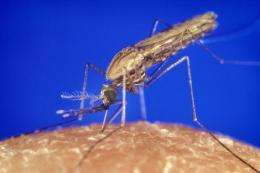
A study published this week in PLoS Medicine by Simon Hay and colleagues from the Malaria Atlas Project (MAP) concludes that there were an estimated 451 million clinical cases of Plasmodium falciparum malaria worldwide in 2007.
In 1998, the World Health Organization (WHO) and other agencies launched Roll Back Malaria, a global partnership that aims to coordinate the fight against malaria. An accurate picture of the global clinical burden of malaria (how many people become ill because of malaria and where they live) is needed so that resources can be directed where they will have the most impact. Although estimates of the global burden of infectious diseases can be obtained using national surveillance data, in places where malaria is endemic diagnosis is often inaccurate and national reporting is incomplete.
In this study, the researchers use an alternative, "cartographic" method for estimating the global clinical burden of P. falciparum malaria that incorporates a map of malaria risk with statistical techniques that better describe uncertainty in those regions where surveillance lacks accuracy. The study reveals that more than half of the estimated burden, and its associated uncertainty, was contributed by India, Nigeria, the Democratic Republic of Congo and Myanmar (Burma).
The lead author for the study, Simon Hay from the Department of Zoology at the University of Oxford, commented that "The uncertainty in our knowledge of the true malaria burden in only four countries confounds our ability to assess progress in relation to international development targets at the global level. It's clear that we urgently need an increased focus on reliably enumerating the clinical burden of malaria in these nations". He also pointed out that "The divergence in our estimates and those of the World Health Organization is greatest in Asia and acute in India. We have sought to explore on a country by country basis how these differences arise, the relative uncertainty in the alternative burden estimation approaches and the potential insights that could be gained by hybridising the two".
More information: Hay SI, Okiro EA, Gething PW, Patil AP, Tatem AJ, et al. (2010) Estimating the Global Clinical Burden of Plasmodium falciparum Malaria in 2007. PLoS Med 7(6): e1000290. doi:10.1371/journal.pmed.1000290


