Microorganisms in toxic groundwater fine-tuned to survive
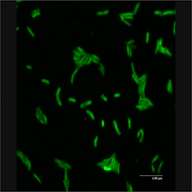
(PhysOrg.com) -- Microorganisms can indeed live in extreme environments, but the ones that do are highly adapted to survive and little else, according to a collaboration that includes Department of Energy's Oak Ridge National Laboratory and Joint Genome Institute (JGI) and the University of Oklahoma.
The metagenomic study of a "stressed" microbial community in groundwater near a former waste disposal pond site on DOE's Oak Ridge Reservation (ORR) revealed microbes with an overabundance of genes involved in DNA recombination and repair and other defense mechanisms for dealing with contaminants and other environmental stresses.
The studies, said ORNL researcher David Watson, are ultimately aimed at developing biologically based methods for reducing the level of the contaminants in the groundwater, which at the ORR site includes nitrates, solvents and heavy metals, including uranium.
"We are looking to better understand the evolution of microbes in the groundwater plume," Watson said. "The microbes that can break down nitrate into nitrogen can have a long-term benefit toward attenuating the plume."
Watson added that researchers particularly want to better understand the genetic makeup of microbes that can metabolize oxidized forms of uranium into a form that is only slightly soluble and thus easier to precipitate and remove from the groundwater environment.
ORNL's Watson was joined in the study by the University of Oklahoma's Jizhong Zhou and Christopher Hemme; Joint Genome Institute Director Eddy Rubin; and a team that included researchers from ORNL's Environmental Sciences Division, the University of Oklahoma's Institute for Environmental Genomics, Montana State University, Michigan State University and Lawrence Berkeley National Laboratory.
They found that the naturally occurring populations of microbes in the polluted groundwater--which consisted of only a few cell types-- had "very simple" genetic structures tuned primarily to overcoming the stresses presented by the toxic soup, which has a highly acidic pH level of 3.5.
The accumulation of genes involved in resistance and responses to stress appears to be a basic survival strategy that has left the microbes with a marked loss in metabolic diversity.
The waste ponds, which are now part of the Oak Ridge Environmental Remediation Sciences Program Integrated Field Research Center, have been out of use for decades and were capped in 1983.
The research, recently published in the on-line ISME (International Society for Microbial Ecology) Journal, is sponsored by DOE's Office of Science.
Provided by Oak Ridge National Laboratory


