Cancer: 'Primitive' gene discovered
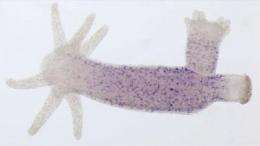
To find the causes for cancer, biochemists and developmental biologists at the University of Innsbruck, Austria, retraced the function of an important human cancer gene 600 million years back in time. For the first time, they have identified the oncogene myc in a fresh water polyp and they have shown that this oncogene has similar biochemical functions in ancestral metazoan and in humans. The scientists published their findings in PNAS.
The myc gene plays an important role in the growth of organisms. It produces a protein that acts as a gene regulator, which controls the expression of up to 15 % of all human genes. This means that it controls whether these genes are activated or deactivated.
A deregulation of the myc gene leads to uncontrolled cell proliferation and to cancer; a deregulated myc gene occurs in about 30 % of all human cancers. "To get a better understanding of the deregulation process caused by the oncogene, we would have to know which genes are regulated by myc and which of these are important for cancers", says Klaus Bister from the Institute of Biochemistry at the University of Innsbruck. Due to the complexity of the human organism, researchers use simpler model systems for their experiments, whose results may then be translated to humans. The Innsbruck scientific teams of Klaus Bister, Markus Hartl and Bert Hobmayer have, for the first time, identified the oncogene in a fresh water polyp (Hydra) and they have shown that it has very similar functions when compared with humans.
Oncogene found in stem cells
The two millimeter long Hydra were one of the first metazoans that developed on the earth about 600 million years ago and can still be found in many waters. "It is amazing that we have been able to find this oncogene in such a simple organism", says Hydra expert Hobmayer from the Institute of Zoology. "Because the gene has been conserved in evolution all the way from Hydra to humans, we are now able to analyze biological and biochemical functions of the myc gene in detail and draw conclusions for the human organism", adds Klaus Bister.
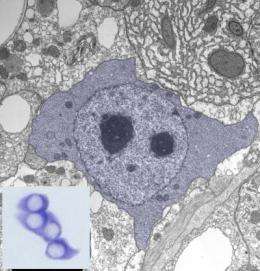
The findings of the researchers from Innsbruck are particularly interesting because they identified the oncogene in the stem cell system of Hydra. "Our experiments are bound to uncover interesting findings about stem cells", says Prof. Bister. The stem cells in the fresh water polyp strongly indicate its regenerative ability - the polyp completely regenerates within five days and, thus, it could theoretically age ad infinitum.
Success for research focus
Scientists from the Institute of Biochemistry, Institute of Zoology and the Institute of Organic Chemistry of the University of Innsbruck cooperated in this research work, which is a research focus of the University's Centre for Molecular Biosciences (CMBI).
"The idea to look for the oncogene in this early fresh water polyp was developed at a meeting we all attended", explains Klaus Bister, one of the founders and first head of the CMBI. "This joint project directly results from collaboration within the research focus of the University of Innsbruck."
The results have been published at the online edition of the renowned American journal Proceedings of the National Academy of Sciences (PNAS). The researchers are supported by the Austrian Science Funds (FWF).


