Fast, accurate urine test for pneumonia possible, study finds
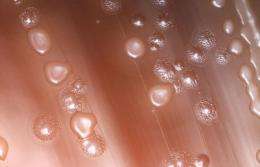
Doctors may soon be able to quickly and accurately diagnose the cause of pneumonia-like symptoms by examining the chemicals found in a patient's urine, suggests a new study led by UC Davis biochemist Carolyn Slupsky.
Pneumonia is a lung infection that annually sickens millions of people in the United States, resulting in approximately 500,000 hospitalizations and thousands of deaths. A rapid, accurate diagnostic test for pneumonia could save lives by enabling doctors to begin appropriate treatment earlier.
Using technology known as nuclear magnetic resonance spectroscopy, the researchers were able to identify a chemical "fingerprint" for the type of pneumonia caused by the bacterium Streptococcus pneumoniae, and compare this to the chemical fingerprints for other types of pneumonia and noninfectious lung diseases.
Findings from the study, conducted by Slupsky and colleagues in Canada and Australia, are discussed in a research profile in the December issue of the Journal of Proteome Research. A patent is pending on the diagnostic procedure.
"This is the first study to demonstrate that NMR-based analysis of metabolites in urine has the potential to provide rapid diagnosis of the cause of pneumonia," said Slupsky, an assistant professor in UC Davis' departments of Nutrition, and Food Science and Technology. She is also a faculty member in UC Davis' Foods for Health Institute.
"It also shows that we can use this technology to quickly and easily monitor patient recovery," Slupsky said. "The goal is a tool for rapid, accurate diagnosis so that patients can quickly begin treatment with the appropriate medication."
Currently, pneumonia is diagnosed by a combination of clinical symptoms, X-rays and analysis of a patient's blood or sputum by bacterial culture. Such tests usually take more than 36 hours to complete and tend to yield a high rate of false-positive results. Previous studies have shown that more than 80 percent of patients admitted to the hospital with pneumonia are misdiagnosed, leading to delays in treatment with the appropriate antibiotic.
Pneumonia is an infection of the lower respiratory tract that causes symptoms such as difficulty in breathing, fever, chest pains and cough. It can be caused by bacteria, viruses, fungi and parasites, and is difficult to diagnose because other noninfectious ailments can mimic pneumonia.
Streptococcus pneumonia is the major cause of community-acquired, rather than hospital-acquired, pneumonia. It can become life threatening in anyone, but is particularly worrisome in elderly patients, smokers and people with weakened immune systems or chronic lung diseases.
In the new study, Slupsky and colleagues applied "metabolomics" — the study of the chemicals produced by the body's metabolic processes — to develop a profile for pneumonia as it appears in a patient's urine.
To do this, they analyzed hundreds of urine samples collected from both healthy individuals and patients with a variety of pulmonary diseases or infections. In the process, they measured 61 metabolites in urine samples using NMR spectroscopy.
They found that urine from patients infected with pneumonia caused by Streptococcus pneumoniae had a telltale chemical profile that clearly distinguished those people from healthy individuals or patients with other ailments.
"By analyzing urine samples collected at various intervals during the patient's hospitalization, we could actually observe sick patients recover because their recovery was reflected in the chemical composition of their urine," Slupsky said.
She noted that the research team was surprised to find that most of the changes in metabolites related to infection by Streptococcus pneumoniae were caused by the body's response to the infection rather than by the invading bacteria.
"In future studies, we hope to explore how bacteria and other microbes interact with the body of the individual they infect, and how these interactions alter metabolism in the body, resulting in unique metabolite profiles in the urine," she said.
Slupsky conducted this research while at the University of Alberta. She joined UC Davis in July 2008. Her research focuses on interactions between the human body and bacteria, as they relate to health and disease conditions.
She collaborated on the study with researchers at the University of Alberta, University of Toronto and Austin Health in Australia.
Source: University of California - Davis


