Umbilical stem cells may help recover lost vision for those with corneal disease
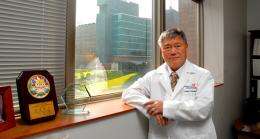
(PhysOrg.com) -- New research from the University of Cincinnati (UC) may help in the recovery of lost vision for patients with corneal scarring.
Winston Whei-Yang Kao, PhD, professor of ophthalmology, along with other researchers in UC's ophthalmology department found that transplanting human umbilical mesenchymal stem cells into mouse models that lack the protein lumican restored the transparency of cloudy and thin corneas.
Mesenchymal stem cells are "multi-potent" stem cells that can differentiate into a variety of cell types.
These findings are being presented Dec. 8 in San Diego at the 49th Annual Meeting of the American Society of Cell Biology.
"Corneal transplantation is currently the only true cure for restoration of eyesight that may have been lost due to corneal scarring caused by infection, mechanical and chemical wounds and congenital defects of genetic mutations," Kao says. "However, the number of donated corneas suitable for transplantation is decreasing as the number of individuals receiving refractive surgeries, like LASIK, increases."
"Worldwide, there is a shortage of suitable corneas for transplantation, and at the present time, there is no effective alternative procedure besides corneal transplantation to treat corneal blindness," he continues. "There is a large need to develop alternative treatment regimens, one of which may be the transplantation of mesenchymal stem cells."
Researchers used mouse models that did not have the lumican gene, also known as lumican knock-out models. Lumican is a protein that controls the formation and maintenance of transparent corneas.
"Lumican knock-out models manifested thin and cloudy corneas," he says. "Transplantation of the umbilical stem cells significantly improved transparency and increased corneal stromal thickness in these mice."
In addition, Kao says, the umbilical mesenchymal stem cells survived in the mouse stroma (connective tissue) for more than three months with minimal or no rejection and became corneal cells, repairing lost functions caused by mutations.
"Our results suggest a potential treatment regimen for congenital and/or acquired corneal diseases," he says, adding that the availability of human umbilical stem cells is almost unlimited. "These stem cells are easy to isolate and can be recovered quickly from storage when treating patients.
"These findings have the potential to create new and better treatments—and an improved quality of life—for patients with vision loss due to corneal injury."
Source: University of Cincinnati (news : web)


