Travel book goes mobile with scannable QR code
(AP) -- Many travelers still rely on comprehensive printed guidebooks for tourism information. But travelers are also increasingly using mobile technology to plan a trip or find their way around.
Now a technology called QR codes, for Quick Response, offers a way to forge a functional relationship between your guidebook and your smart phone. The codes are already big in Japan, but relatively unknown in the U.S.
QR codes are essentially barcodes that can be scanned by smart phone cameras and other devices. You aim your camera at a QR code on a page in a travel book, for example, and it links to information online, such as a map or directions based on the user's location. The user can also store information in the phone about the place that's described on the page.
QR codes can also appear in media other than books. You can scan them off a computer screen. They've been put on T-shirts and even billboards.
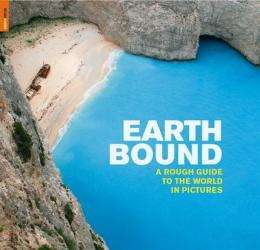
A new travel book is using QR codes to help readers link to spots around the globe. "Earthbound: A Rough Guide to the World in Pictures" ($30) is a coffee-table book with more than 250 gorgeous photos from all over the world. Each comes with personal insights from the photographer who captured the image, some of which have never before been published.
What's new in "Earthbound" is the strange black-and-white box next to each image. This is the QR code, looking something like a pixelated alien from the 1970s video game "Space Invaders." The code offers a link to the location of what's pictured in the photo, using Google Maps online.
Sounds neat? It is, except for the fact that this emerging technology still has a few bugs.
It took me and an uber-techie colleague about a half-hour of mucking about with our iPhones to get the reader apps working properly. The intro to the book suggests using the free apps 2D sense and NeoReader to scan the QR codes.
Neither of us could get the 2D sense to work reliably, unless we photocopied and blew up the image of the QR code. NeoReader was a bit better, but still a bit wonky.
A Rough Guides spokeswoman acknowledges some problems, especially with earlier generation iPhones, but says the new ones and BlackBerrys perform better.
To be fair, I have the earlier-generation iPhone and its camera doesn't focus well on close-up objects. NeoReader started working pretty well once I started scanning the image from a foot or more away with good light and the page carefully flattened. The new iPhone 3GS did perform much better.
Once we were able to scan the codes, we were rewarded with a Google map of the spot where the photo was taken. You can look at a satellite image, which was pretty for some of the outdoor spots like Parque Nacional Volcan Irazu in Costa Rica or Shipwreck Bay in Greece.
You can also bookmark the locations so that if you ever get to the region, your phone will give you directions to visit the spot. For now, though, it seems to be of fairly limited utility.
But offering technology that marries books and smart phones is a big step. Guidebooks could start including QR codes for all kinds of useful information. Want to see how to get to the Louvre from your hotel in Paris and store hours and admission information? Scan a code. Want to add a phone number for that quaint little restaurant in Florence to your contacts so you can leave the guidebook home? Instead of tapping out the number on your tiny keyboard, scan a code.
Scanning the codes in a guidebook for your favorite listings is a bit like folding the pages down for quick reference, or even printing out pages from a tourism Web site. But your smart phone stores the data so you don't have to carry all that paper around, and it can also add information that's not in the book, like directions.
"We're really testing the waters," said Rough Guides Design Manager Scott Stickland, speaking by phone from London. "QR is still very much an underground thing here."
But he hopes the technology catches on. That's why he really pushed to use the codes in the book. He foresees a future where a reader can scan a few codes and leave a book at home or in the hotel room, while accessing user-generated content, maps, contact information, podcasts or other features on the go with a mobile device.
The technology is moving fast. Stickland says he now recommends the QuickMark code-scanning app, but it wasn't mentioned in the book because the app wasn't available when the book went to press. Now you can buy it in the iTunes app store for 99 cents.
QR may be the vehicle to bridge that split between print and mobile. Stickland says at Rough Guides it's "universally agreed our guides need to do more to integrate online and printed content." Though for now, Stickland says there are no "concrete plans" to incorporate QR in new guidebooks until the standard is more accepted.
Even if QR fizzles, the book makes a nice read for the armchair traveler. As Stickland says, it culls the finest images of food, people, adventure, nature and other themes from Rough Guides' rich library of more than 120,000 photos.
©2009 The Associated Press. All rights reserved. This material may not be published, broadcast, rewritten or redistributed.


