The visual editor: IBM Makes It Easier To Browse Web Sites On Mobile Devices (w/ Video)
Oct 26, 2009
IBM Researchers are making Web sites more readable on the small screens of mobile devices. IBM computer scientists borrowed technology that the company originally developed for the visually impaired. Employing arrows and drag-and-drop capabilities, IBM's visual editor proof-of-concept simplifies the process of presenting content in the correct order.

IBM researchers have created technology, initially developed for visually-impaired users, that makes it simpler for Webmasters to make their Web sites more readable on the small screens of mobile devices, reducing burdensome scrolling through out-of-order text and graphics.

The Web has turned consumers into do-it-yourself travel agents, data entry clerks and librarians. With the rise of blogs and social media, they have also been turned into syndicated columnists. As such, many have also been forced to become amateur Webmasters, faced with the challenge of cramming content into a format readable on , including cellphones -- an increasingly common way to access the Internet.

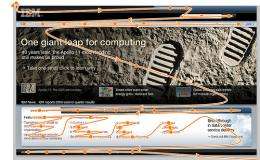
To help Webmasters of all skill levels, IBM researchers in Tokyo have developed a visual editor technology that enables Webmasters to arrange their Web site content reading flow in a logically-ordered sequence -- without changing the existing content -- that can be easily read on the small screens of mobile devices. The editing tool can also improve the browsing experience for visually impaired Web surfers who use voice browsers to read .

This video is not supported by your browser at this time.

The visual editor uses smoothly connecting arrows to show in what order voice browsers would present content. To edit the reading flow, Webmasters need only drag, drop and re-arrange the arrows. This is an improvement over more cumbersome methods, such as using voice browsers to check reading flow line by line, and requiring Webmasters to copy and paste large amounts of content to a memopad to check reading flow.

In addition to Web pages, the tool can be applied to electronic presentations, PDF documents and Flash content to improve their contextual reading flow.

Global mobile subscriptions are expected to reach 4.6 billion by the end of the year, according to the International Telecommunication Union. IBM Research is making a five-year, US $100 million investment to advance mobile services and capabilities for businesses and consumers worldwide. Through this effort, IBM is aiming to drive new intelligence into the underpinnings of the mobile Web to create new efficiencies in business operations and people's daily lives.

More information: For more information about IBM's mobile Web initiative, please visit www.ibm.com/press/us/en/presskit/24254.wss

Source: IBM

Explore further: Model will unlock mysteries of the voice

add to favorites email to friend print save as pdf

Related Stories

BlackBerry Storm 2 coming soon (w/ Video)

Oct 20, 2009

(PhysOrg.com) -- RIM are soon to release their updated BlackBerry, the Storm 2 smart phone, with a more streamlined design and touch-sensitive buttons instead of the hardware buttons of the first version.

New robot skier takes to the slopes (w/ Video)

Oct 23, 2009

(PhysOrg.com) -- A new robot skier has been invented that can be fitted with off-the-shelf skis. This is not the first skiing robot, since Japanese scientists have produced their own (see PhysOrg.com article here), but is bigger and heavie ...

Two Robot Chefs Make Omelets

Dec 04, 2008

(PhysOrg.com) -- No "house of the future" is complete without a household robot to do the cooking and cleaning. Although today´s robots still have a ways to go before substituting for a real live-in maid, ...

Recommended for you

Model will unlock mysteries of the voice

7 hours ago

Swedish researchers are leading the development of the world's first comprehensive model of the human voice, which could contribute to better voice care, voice prosthetics, talking robots and teaching opportunities.

Patented system better secures digitally stored data

May 21, 2013

(Phys.org) —Arizona State University computer scientist Gail-Joon Ahn has been granted a U.S. patent for a novel identity management system that helps protect personal identity information stored on digital devices.

UC Davis startup changes listening experience

May 20, 2013

Fifteen years of research at the University of California, Davis, is being turned into commercial products by Dysonics, a startup company based in San Francisco. Since becoming the first "graduate" from the Engineering Translational ...

Research finds new channels to trigger mobile malware

May 16, 2013

(Phys.org) —Researchers at the University of Alabama at Birmingham (UAB) have uncovered new hard-to-detect methods that criminals may use to trigger mobile device malware that could eventually lead to targeted ...

User comments : 0

More news stories

Solar plane aims for new world distance record

Solar Impulse, the first aircraft that can fly day and night fueled entirely by energy from the sun, embarked Wednesday on the second leg of its historic journey across the American continent.

Facebook joins Web freedom group

Facebook on Wednesday became a full member of the Global Network Initiative, a non-governmental organization promoting Internet freedom and privacy rights.