New evidence that green tea may help improve bone health
Sep 16, 2009
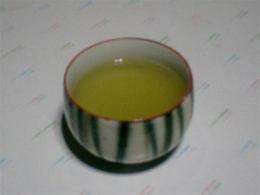
Green tea. Credit: Wikimedia Commons

Researchers in Hong Kong are reporting new evidence that green tea — one of the most popular beverages consumed worldwide and now available as a dietary supplement — may help improve bone health. They found that the tea contains a group of chemicals that can stimulate bone formation and help slow its breakdown. Their findings are in ACS' Journal of Agricultural and Food Chemistry.

The beverage has the potential to help in the prevention and treatment of osteoporosis and other diseases that affect million worldwide, the researchers suggest.

In the new study, Ping Chung Leung and colleagues note that many scientific studies have linked tea to beneficial effects in preventing cancer, heart disease, and other conditions. Recent studies in humans and cell cultures suggest that tea may also benefit bone health. But few scientific studies have explored the exact chemicals in tea that might be responsible for this effect.

The scientists exposed a group of cultured bone-forming cells (osteoblasts) to three major components — epigallocatechin (EGC), gallocatechin (GC), and gallocatechin gallate (GCG) — for several days. They found that one in particular, EGC, boosted the activity of a key enzyme that promotes bone growth by up to 79 percent. EGC also significantly boosted levels of in the cells, which strengthens bones. The scientists also showed that high concentrations of ECG blocked the activity of a type of cell (osteoclast) that breaks down or weakens bones. The green tea components did not cause any toxic effects to the , they note.

More information: "Effects of Tea Catechins, Epigallocatechin, Gallocatechin, and Gallocatechin Gallate, on Bone Metabolism",

Source: American Chemical Society (news : web)

Explore further: Attacking MRSA with metals from antibacterial clays

add to favorites email to friend print save as pdf

Related Stories

Green tea may protect the bladder from becoming inflamed

May 20, 2007

Herbal agents could be used to treat inflammatory bladder diseases, according to a preliminary study that looked at the ability of green tea to protect bladder cells from inflammation. The University of Pittsburgh School ...

Tea: the New Anti-Aging Beverage?

Mar 30, 2006

Tea may be more than a trendy coffee alternative, according to researchers at the Douglas Hospital Research Centre (DHRC). Their findings, published in a recent issue of the European Journal of Neuroscience, sugges ...

Go green for healthy teeth and gums

Mar 05, 2009

With origins dating back over 4,000 years, green tea has long been a popular beverage in Asian culture, and is increasingly gaining popularity in the United States. And while ancient Chinese and Japanese medicine believed ...

Green tea unlikely to reduce cancer risk

Jul 01, 2005

The evidence that green tea may reduce risk of some cancers is weak and its unlikely to cut cancer risk, U.S. Federal Drug Administration officials said.

Recommended for you

Attacking MRSA with metals from antibacterial clays

May 17, 2013

In the race to protect society from infectious microbes, the bugs are outrunning us. The need for new therapeutic agents is acute, given the emergence of novel pathogens as well as old foes bearing heightened antibiotic resistance.

Keeping fruit, vegetables and cut flowers fresh longer

May 15, 2013

New technology offers the promise of reducing billions of dollars of losses that occur each year from the silent, invisible killer of fruits, vegetables and cut flowers—a gas whose effects are familiar to everyone who has ...

Why don't beetles freeze in the winter?

May 14, 2013

For 37 years, Queen's University Biochemistry professor Peter Davies has been unraveling the mystery of why some organisms including insects and fish don't freeze in the winter. His research into insect antifreeze protein ...

The molecular basis of strawberry aroma

May 13, 2013

You know that summer is here when juicy red strawberries start to appear on the shelves. In Germany, this seasonal fruit has never been more popular: on average 3.5 kilos per head were consumed in 2012—a ...

A new dimension for 3-D protein structures

May 13, 2013

(Phys.org) —3D structures of biological molecules like proteins directly affect the way they behave in our bodies. EPFL scientists have developed a new infrared-UV laser method to more accurately determine ...

User comments : 0

More news stories

Attacking MRSA with metals from antibacterial clays

In the race to protect society from infectious microbes, the bugs are outrunning us. The need for new therapeutic agents is acute, given the emergence of novel pathogens as well as old foes bearing heightened antibiotic resistance.

Beautiful 'flowers' self-assemble in a beaker

By simply manipulating chemical gradients in a beaker of fluid, materials scientists at Harvard have found that they can control the growth behavior of crystals to create precisely tailored structures—such ...

Making gold green: New non-toxic method for mining gold

Northwestern University scientists have struck gold in the laboratory. They have discovered an inexpensive and environmentally benign method that uses simple cornstarch—instead of cyanide—to isolate gold from raw materials ...

Morocco to harness the wind in energy hunt

Morocco is ploughing ahead with a programme to boost wind energy production, particularly in the southern Tarfaya region, where Africa's largest wind farm is set to open in 2014.

Galaxy's Ring of Fire

Johnny Cash may have preferred this galaxy's burning ring of fire to the one he sang about falling into in his popular song. The "starburst ring" seen at center in red and yellow hues is not the product of ...