Sending science down the phone: New technology will map research across the world
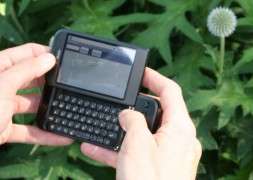
(PhysOrg.com) -- New mobile phone software will help epidemiologists and ecologists working in the field to analyse their data remotely and map findings across the world, without having to return to the lab, according to research published in PLoS One today. The authors of the study, from Imperial College London, say the software will also enable members of the public to act as 'citizen scientists' and help collect data for community projects.
The researchers have developed an application for 'smartphones' that allows a scientist or member of the public to collect and record data, photos and videos - for example to document the presence of an animal or plant species - and then send this information to a central web-based database. The website records the user's location, using the phone's GPS system, and it can then display all of the data collected on this topic across the world, using Google Maps.
Users can also use their smartphones to request and view all the maps and analyses available. The new technology, which is funded by the Wellcome Trust, means that groups of researchers should be able to quickly and easily build up and share maps of, for example, the distribution of an endangered species or cases of a disease, and analyse patterns that emerge. The Imperial team is currently using the software, known as EpiCollect, as a tool in their studies of the epidemiology of bacterial and fungal infectious diseases.
David Aanensen, lead author of the paper from the Department of Infectious Disease Epidemiology at Imperial College London said: "We're excited about launching this new software - researchers have been able to send information by phone before, but this is the first time that we have been able to link all the functionality of smartphone technology to a web-based database for scientists to use. Our software is ideal for projects where multiple people collect data in the field and submit these to a central website for mapping and analysis. A key advantage is that data collected by researchers can also be requested from the website and displayed and analysed directly on the smartphone".
The researchers suggest that members of the public could also get involved in scientific research using the tool and that schools could also use the software, for example on biology field courses.
Aanensen adds: "If a research team or a group of school children wants to look at how a particular species is spread across their locality, or the world, they can download the application for free and start collecting and submitting data to a project website. We hope that EpiCollect could also be used for community projects, for example projects that ask members of the public to track sightings of birdlife in their garden. It should be much quicker and simpler to submit sightings to the website by phone than email or the post."
Suitable smartphones for EpiCollect use the Android open-source operating system, developed by Google and the Open Handset Alliance. It means that software developers can produce their own applications to run on the phones and anybody can download the software for free. There are currently several different handsets available in the UK and the new software will be available to anybody with one of these phones. The researchers have also produced a beta version for the iPhone, so the software will soon be available to even more people.
In order to use the new system, a researcher sets up a web database for their particular study and a specific version of EpiCollect is produced that can be loaded on multiple phones, allowing users to start collecting and submitting data.
More information: "EpiCollect: Linking Smartphones to Web Applications for Epidemiology, Ecology and Community data collection." PLoS One, 16 September 2009.
Source: Imperial College London (news : web)


