Urine samples could be used to predict responses to drugs, say researchers
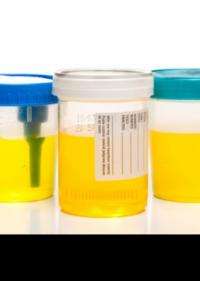
(PhysOrg.com) -- Researchers may be able to predict how people will respond to particular drugs by analysing their urine samples, suggest scientists behind a new study published today in the journal Proceedings of the National Academy of Sciences.
Not all drugs are effective in all patients and occasionally, susceptible individuals can have adverse reactions to them. In today's study, researchers from Imperial College London and Pfizer Research and Development showed that it was possible to predict how different individuals would deal with one drug by looking at the levels of different products of metabolism, known as metabolites, in their urine before they took a dose of the drug.
The researchers say that this kind of 'metabolic profiling' could ultimately be a valuable tool for predicting how different individuals will react to drugs, enabling those developing drugs to match drug treatments to individuals' requirements and avoid adverse side effects. They argue that those developing new, personalised approaches to medicine will need to consider metabolic as well as genetic profiling when developing drugs, in order to produce a complete picture of different individuals' makeup.
Metabolic profiles reflect complex gene-environment interactions and the activities of gut bacteria - factors that can influence drug metabolism and toxicity.
Bacteria in the gut, or gut microbes, live symbiotically in human and animal bodies and there is growing recognition that they play an important part in influencing people's metabolic makeup. Today's study provides evidence that gut microbes can have a crucial role in determining a person's response to a particular drug.
The new study looked at 99 healthy male volunteers aged between 18 and 64, taking one dose of the commonly used painkiller acetaminophen, widely known as paracetamol in the UK. The researchers took urine samples from the men before they took the paracetamol dose and for six hours afterwards and analysed the metabolites in the samples using 1H NMR spectroscopy.
The results revealed that a compound called para-cresol sulphate, which is derived from para-cresol produced by bacteria in the gut, was an indicator of how the men would metabolise the dose of paracetamol. Those with higher levels of para-cresol sulphate metabolised the drug in a different way from those with lower levels. The scientists suggest that this is because the body uses compounds containing sulphur to process drugs like paracetamol effectively and para-cresol can deplete sulphur compounds in the body.
The body uses sulphur to process a variety of drugs, not just paracetamol, so the new findings about para-cresol could have significant implications for a whole group of drugs, say the researchers. Further work is now needed to explore areas such as the relationship between para-cresol and other drugs, and whether para-cresol has any relevance to instances of accidental paracetamol poisoning.
The researchers also suggest that where the bacteria in the gut are affecting the body's ability to process a particular drug, it might ultimately be possible to alter the makeup of these bacteria so that the body can process a variety of drugs more effectively and safely.
Professor Jeremy Nicholson, senior author of the study from the Department of Biomolecular Medicine at Imperial College London, said: "This result is very encouraging. Pre-clinical studies had suggested it might be possible to predict how individuals would react to drugs by looking at their pre-dose metabolite profiles, but this is the first time that anyone has been able to show convincingly that such a test could work in humans. The beauty of pre-dose metabolite profiling is that it can tap into both genetic and environmental factors influencing drug treatment outcomes.
"Our finding also highlights the potential importance of the gut bacteria in determining how different people react to drug treatments. The study gave us some unexpected insights into the comparative ease with which the body's sulphur-containing reserves can be depleted in normal adults by exposure to microbial metabolites. This may have more widespread implications relating to understanding the development of a number of diseases where disruption of sulphur metabolism is an important factor," added Professor Nicholson.
Dr Jeremy Everett, the Vice President of the Research Centres of Emphasis in Pfizer Global Research and Development at Sandwich, UK, and another author of the study, said: "Pfizer and other drug companies are using genetic information both to select the targets that drugs act against, and also to select the patients who will benefit most from treatment with a particular drug in clinical trials and when a drug is on the market. Although this is the first study of its kind and much further research is needed, this finding shows that in the future, researchers may need to consider human metabolic profiles as well as genetic profiles when choosing targets for drug discovery programs and when selecting patients for future clinical trials."
Source: Imperial College London (news : web)


