Discovery of genetic toggle switch inches closer to possible diabetes cure
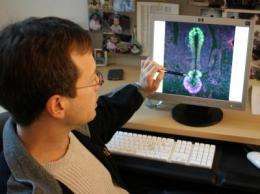
Scientists have identified a master regulator gene for early embryonic development of the pancreas and other organs, putting researchers closer to coaxing stem cells into pancreatic cells as a possible cure for type1 diabetes.
Researchers at Cincinnati Children's Hospital Medical Center report their findings in the July 21 Developmental Cell.
Besides having important implications in diabetes research, the study offers new insights into congenital birth defects involving the pancreas and biliary system by concluding both organs share a common cellular ancestry in the early mouse embryo.
This discovery reverses a long standing belief that the biliary system's origin is connected to early embryonic formation of the liver, the researchers said. The pancreas regulates digestion and blood sugar, and the biliary system is vital for digestion. If the organs do not form properly during fetal development, it can be fatal.
The study reports that one gene, Sox17 (a transcription factor that controls which genes are turned on or off in a cell) is the key regulator for giving instruction to cells in early mouse embryos to become either a pancreatic cell or part of the biliary system.
The first author on the paper is Jason Spence, Ph.D., a research fellow in the lab of the study's senior investigator, James Wells, Ph.D., a researcher in the Division of Developmental Biology at Cincinnati Children's and associate professor of pediatrics at the University of Cincinnati College of Medicine.
"We show that Sox17 acts like a toggle or binary switch that sets off a cascade of genetic events," said Dr. Wells. "In normal embryonic development, when you have an undecided cell, if Sox17 goes one way the cell becomes part of the biliary system. If it goes the other way, the cell becomes part of the pancreas."
The finding advances ongoing research by Dr. Wells and his team to guide embryonic stem cells to become pancreatic beta cells, which scientists believe could be used to treat or cure type1 diabetes. The disease occurs when the immune system attacks insulin producing beta cells in the pancreas, usually destroying them beyond repair before the illness is diagnosed.
"With this study showing us that turning one gene on or off in a mouse embryo instructs a cell to become pancreatic or biliary, now we'll see if that same gene, Sox17, can be used to direct an embryonic stem cell to become a biliary cell instead of a pancreatic cell. This might be used one day to replace a diseased pancreas or bile duct in people," said Dr. Wells.
The study explains that Sox17 initially works in conjunction with two other genes (the transcription factors Pdx1 and Hes1) to decide which organ fate ventral foregut progenitor cells will take. Researches demonstrated that Sox17's key role begins when the mouse embryo is 81/2 days old. If Sox17 toggles one way, with its expression repressed by its interaction with Hes1, then Pdx1 more or less takes over to prompt formation of the ventral pancreas. If Sox17 toggles the other way to increases its expression, the gene helps set off formation of the biliary system.
Dr. Wells and his colleagues are also using data from the current study to conduct experiments that should reveal what other genes are turned on or off along molecular cascade set into motion by Sox17.
"Although Sox17 is the master switch, it triggers a molecular cascade of switches, and a defect in any of those can cause the whole thing to go wrong, resulting in congenital defects of the pancreas and biliary system," Dr. Wells said.
Jeffrey Whitsett, M.D., executive director of the Cincinnati Children's Perinatal Institute and one of the current study's authors, said the research provides important clues for clinicians managing congenital birth defects of the pancreas and biliary system, which includes the bile ducts and gall bladder. Malformations in this region of the gastrointestinal tract can cause blockage of bile ducts or the intestines. One of the common defects is a condition called biliary atresia, in which the bile ducts are blocked, causing bile to accumulate, back up and leading to potential damage of the pancreas or liver.
"Babies in neonatal intensive care frequently are born with medically challenging birth defects. The present studies help unravel the complex genetic systems controlling the formation of the gastrointestinal tract and provide the framework for future therapies of disease affecting the formation and function of the pancreas, liver, and bile ducts," Dr. Whitsett said.
Source: Cincinnati Children's Hospital Medical Center (news : web)


