Microscopic morphology adds to the scorpion family tree
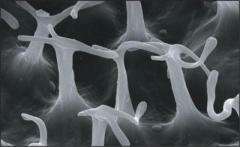
Modern microscopy technology has allowed two scorpion biologists, Carsten Kamenz of the Humboldt University in Berlin and Lorenzo Prendini of the American Museum of Natural History, to study and document what is nearly invisible. Looking at tiny morphological features like the sculpting of the hair-like outgrowths on lamellae—structures that fold like the leaves of a book and give the scorpion respiratory system its name, the book lung—Kamenz and Prendini found a wealth of new variation that gives insight into the evolutionary relationships among scorpions. Their research, recently published in the Bulletin of the American Museum of Natural History, presents their raw data as an illustrated atlas of the book lungs of all major lineages of scorpions.
"The richness of morphology is a vast and still largely unexplored source of data for understanding the evolutionary relationships among organisms," says Prendini, Associate Curator in the Division of Invertebrate Zoology at the Museum. "We have not learned all we can because the more we look at morphology, the more we find."
Kamenz and Prendini revisited book lung morphology for the first time since 1926 to assess whether these organs illuminate the scorpion tree of life. Book lungs allow some arachnids, including all scorpions, most spiders, and whip scorpions, to breathe air. Scorpions were traditionally placed at the base of the phylogenetic tree, as a sister group to all other arachnids, but molecular data has complicated this picture by suggesting that scorpions move higher on the tree, closer to sun spiders and daddy long legs. Consequently, the question of whether the book lung evolved once, at the base of the arachnid phylogenetic tree, or more than once, as arachnids adapted to life out of water, is unresolved.
This study is the most complete review of scorpion breathing apparatus ever: 200 specimens from 100 genera in 18 scorpion families were examined. This sample represents all major scorpion lineages. Modern microscopy techniques—scanning electron microscopy—allowed Kamenz and Prendini to see detail measured in microns (or one millionth of a meter) that was impossible to observe 100 years ago.
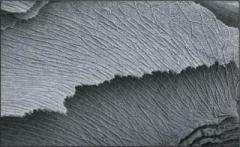
Three new traits were discovered by peering closely at the specimens: the surface sculpting of the respiratory lamellae (the leaves of the book); the edges of the leaves, within a chamber called an atrium (the pre-chamber of the book lung); and the processes on the posterior valve-like edges of the spiracles (the point at which the book lung opens to the atmosphere). The tremendous diversity of structures documented by Kamenz and Prendini is matched only by the respiratory organs of air-breathing crabs.
These structures contain phylogenetically important variation at multiple branches in the scorpion tree. One striking example is the sculpting on the surface of the book lung's leaves. While all nonbuthid scorpions have papillate trabeculae (simple or branched hair-like projections) on the leaves' surfaces, the buthids (the venomous thick-tailed scorpions) and chaerilids have reticulate venation (a network of veins), a fundamental difference between these scorpion lineages that is independently supported by external morphology and DNA.
The finding suggests that a significant change in the structure of the respiratory apparatus must have occurred early in the evolution of modern scorpions. Both conditions of the lamellar surface show additional variation that is informative higher up the branches of the scorpion tree. The data gathered by Kamenz and Prendini will be combined with DNA sequences and character traits from other parts of the scorpion anatomy to reconstruct the scorpion tree of life.
"The best way to understand the evolution of scorpions, like any group of organisms, is to investigate multiple lines of evidence, using the best techniques available. As the book lung study shows, we may not recognize the significance of something until we have the means to study it properly," says Prendini.
Kamenz, at the Humboldt University, agrees. "Future research will confirm the importance of book lungs and other sources of anatomical data, long neglected, for reconstructing the scorpion tree."
The research paper can be accessed for free at digitallibrary.amnh.org/
Source: American Museum of Natural History


