New roadside beautification concept studied
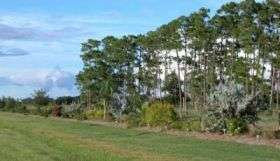
Travel America's highways or drive down any city street this summer and you'll probably see them. From small, manicured beds of flowers maintained by community volunteers to extensive landscaping projects along America's byways, roadside gardens are taking root.
Aside from the obvious aesthetic benefits, studies indicate that roadside beautification, including landscaping and gardens, can help drivers reduce stress, frustration, and aggression, while helping maintain safe highways. Implementing simple, cost-effective beautification projects can enhance communities and improve quality of life for residents and travelers.
A recent article published in the April 2008 issue of HortTechnology introduces the "linear garden"; a new, dual-purpose method to enhance roadsides while providing teaching gardens for students and community members.
Dr. Sandra Wilson, Associate Professor of Environmental Horticulture at the University of Florida's Indian River Research and Education Center (IRREC), and a team of researchers designed and planted a linear garden along a road at the entrance to the University of Florida and the U.S. Department of Agriculture in Fort Pierce, Florida. Wilson explained the concept of the linear garden, saying, "The idea originated when existing university gardens, used as teaching labs for students, reached maximum plant capacity. We needed to find a way to teach students about plants in a limited amount of space, and that need paralleled our community's interest in enhancing local roadside beautification projects."
With minimal installation and maintenance costs, students and professors established the linear garden in a single strip measuring three feet wide by 2,426 feet long. Amazingly, 817 plants were planted in the compact space. The garden was designed to showcase landscape plants commonly used in south-central Florida, and year-round visual interest was maintained by planting trees, palms, shrubs, ground covers, and grasses.
Dr. Wilson noted that the new linear garden is used as a teaching experience for students in five college courses. Visitors to the garden also include students from local community colleges and garden club members. The garden also provides visual interest for residents and passers-by.
Summing up the project, Wilson stated, "A linear garden is an efficient, space-saving way to present plants for teaching purposes, and also serves to beautify the roadside throughout the year".
The complete study and abstract are available on the ASHS HortTechnology electronic journal web site: horttech.ashspublications.org/ … nt/abstract/18/2/318
Source: American Society for Horticultural Science


.jpg)


