New nanotech products hitting the market at the rate of 3-4 per week
Apr 24, 2008
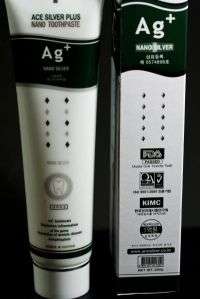
Nano Silver Toothpaste
Nano Silver Toothpaste, purchased in local market. Credit: 2008 - Alex Parlini, Project on Emerging Nanotechnologies

New nanotechnology consumer products are coming on the market at the rate of 3-4 per week, a finding based on the latest update to the nanotechnology consumer product inventory maintained by the Project on Emerging Nanotechnologies (PEN).

One of the new items among the more than 600 products now in the inventory is Swissdent Nanowhitening Toothpaste with “calcium peroxides, in the form of nano-particles.” Today, in testimony before the Senate Commerce Committee, PEN Project Director David Rejeski cited Ace Silver Plus—another of the nine nano toothpastes in the inventory—as an example of the upsurge in nanotechnology consumer products in stores. The hearing marks the start of U.S. Senate debate on the future direction of the annual $1.5 billion federal investment in nanotechnology research and development (R&D).

The number of consumer products using nanotechnology has grown from 212 to 609 since PEN launched the world’s first online inventory of manufacturer-identified nanotech goods in March 2006. Health and fitness items, which includes cosmetics and sunscreens, represent 60 percent of inventory products. The colorful and searchable list of nanotechnology merchandise—containing everything from nanotech diamonds and cooking oil, to golf clubs and iPhones—is available free at www.nanotechproject.org/consumerproducts.

There are 35 automotive products in the PEN inventory, including the Hummer H2. General Motors Corporation bills the H2 as having a cargo bed that “uses about seven pounds of molded in color nanocomposite parts for its trim, center bridge, sail panel and box rail protector.”

Nanoscale silver is the most cited nanomaterial used. It is found in 143 products or over 20 percent of the inventory. Carbon, including carbon nanotubes and fullerenes, is the second highest nanoscale material cited. Other nanoscale materials explicitly referenced in products are zinc (including zinc oxide) and titanium (including titanium dioxide), silica and gold.

While polls show most Americans know little or nothing about nanotechnology, in 2006 nanotechnology was incorporated into more than $50 billion in manufactured goods. By 2014, Lux Research estimates $2.6 trillion in manufactured goods will incorporate nanotechnology—or about 15 percent of total global output. Despite a 2006 worldwide investment of $12.4 billion in nanotech R&D, comparatively little was spent on examining nanotechnology’s potential environmental, health and safety risks.

“Public trust is the ‘dark horse’ in nanotechnology’s future,” says Rejeski in his testimony. “If government and industry do not work to build public confidence in nanotechnology, consumers may reach for the ‘No-Nano’ label in the future and investors will put their money elsewhere.”

According to Rejeski, “The use of nanotechnology in consumer products and industrial applications is growing rapidly, with the products listed in the PEN inventory showing just the tip of the iceberg. Public perceptions about risks—real and perceived—can have large economic consequences. How consumers respond to these early products—in food, electronics, health care, clothing and cars—is a litmus test for broader market acceptance of nanotechnologies in the future.”

Source: Project on Emerging Nanotechnologies

Explore further: Single-cell transfection tool enables added control for biological studies

add to favorites email to friend print save as pdf

Related Stories

findNano app puts nanotech in your pocket

Nov 12, 2009

The Project on Emerging Nanotechnologies (PEN) has developed findNano, an application for Apple's iPhone and iPod Touch that lets users discover and determine whether consumer products are nanotechnology-enabled. Nanotechnology, ...

Nanotech in your vitamins

Jan 14, 2009

The ability of the Food and Drug Administration (FDA) to regulate the safety of dietary supplements using nanomaterials is severely limited by lack of information, lack of resources and the agency's lack of statutory authority ...

Nanoscale silver: No silver lining?

Sep 09, 2008

Widespread use of nanoscale silver will challenge regulatory agencies to balance important potential benefits against the possibility of significant environmental risk, highlighting the need to identify research priorities ...

Supercomputers join cancer fight

Jun 25, 2008

Edmonton-A University of Alberta physicist will lead the fight against cancer, armed with a supercomputer and the will to make Alberta one of the world's top innovation centres.

Recommended for you

Radioactive nanoparticles target cancer cells

1 hour ago

Cancers of all types become most deadly when they metastasize and spread tumors throughout the body. Once cancer has reached this stage, it becomes very difficult for doctors to locate and treat the numerous tumors that can ...

How gold nanoparticles can help fight ovarian cancer

2 hours ago

Positively charged gold nanoparticles are usually toxic to cells, but cancer cells somehow manage to avoid nanoparticle toxicity. Mayo Clinic researchers found out why, and determined how to make the nanoparticles effective ...

Advance in nanotech gene sequencing technique

May 20, 2013

(Phys.org) —The allure of personalized medicine has made new, more efficient ways of sequencing genes a top research priority. One promising technique involves reading DNA bases using changes in electrical ...

User comments : 1

Adjust slider to filter visible comments by rank

Display comments: newest first

superhuman
not rated yet Apr 28, 2008
>calcium peroxides, in the form of nano-particles.

Most of these "nanotechnology" products are laughable, it just so happens that almost every chemical and biological compound has molecules of nanometer or subnanometer size and can be labeled as nanoparticle, its the good old chemistry capitalizing on nanofever.

Water, gasoline, alcohol, drugs, suger and salt in solutions are all nanoparticles! Enjoy the wonders of nanotechnology!

More news stories

How gold nanoparticles can help fight ovarian cancer

Positively charged gold nanoparticles are usually toxic to cells, but cancer cells somehow manage to avoid nanoparticle toxicity. Mayo Clinic researchers found out why, and determined how to make the nanoparticles effective ...

Radioactive nanoparticles target cancer cells

Cancers of all types become most deadly when they metastasize and spread tumors throughout the body. Once cancer has reached this stage, it becomes very difficult for doctors to locate and treat the numerous tumors that can ...

Internet cable from Cuba to Jamaica comes online

A new branch of the Venezuela-to-Cuba undersea fiber-optic cable has reportedly come online, linking the island to nearby Jamaica, increasing Cuba's potential international communications bandwidth and providing a backup ...