A boost for bamboo-based blouses and blankets
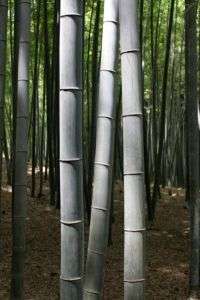
Rising interest in “sustainable” fabrics is fostering a bamboo boom, in which bamboo-based fabrics are hitting the market as a leading eco-friendly textile.
Chemists in Colorado now are reporting solutions to two major problems with bamboo fabrics that may speed adoption of this amazing plant — which grows like Jack’s beanstalk without special care — in garments and other consumer products.
Reporting at the 235th national meeting of the American Chemical Society, Subhash Appidi and Ajoy Sarkar, Ph.D., from Colorado State University have discovered a way of making bamboo fabric that is resistant to the sun’s damaging ultraviolet (UV) radiation and has anti-bacterial properties.
Widely available in Japan, China, India and other countries, bamboo fabric is soft, durable and elastic. It hangs as gracefully as silk, and has an attractive, lustrous sheen. A leading option in the so-called “ethically produced” clothing market, bamboo is one of the world’s fastest growing plants, reaching maturity in about 3-4 years, compared to 25 to 70 years for commercial tree species in the U.S.
“Bamboo is environmentally friendly,” says Appidi. “Pesticides and other agents are necessary to grow most other natural fibers — there is nothing like that in bamboo production.”
But despite bamboo’s promise as an environmentally friendly fiber, Appidi says untreated bamboo fabric has plenty of room for improvement. Raw bamboo fabric lets almost all damaging UV radiation pass through and reach the skin. And while many tout bamboo’s inherent anti-bacterial properties, Appidi found that untreated bamboo fabric did not live up to antimicrobial expectations.
“All cellulose fibers allow more moisture to leak in and provide more food for bacteria to eat. That’s why bacteria grow more on natural fibers rather than synthetic fibers,” says Appidi. The resulting bacterial blooms can lead to unpleasant odors and unsanitary clothing.
For Appidi, creating bacteria-free bamboo garments is a necessity. His goal is to create clothes for use in the medical environment that are nearly 100 percent antibacterial and UV-resistant. Appidi increased the UV-protecting abilities of fabric by coloring pieces of commercially-available bamboo cloth in a dye laced with UV absorbing chemicals. After finding the optimal concentration of absorbing chemicals, he tested UV protection levels.
To improve on the intrinsic antibacterial properties of bamboo, Appidi treated pieces of commercially purchased bamboo fabric with Tinosan —“one of the better antibacterial agents on the market right now,” according to the researcher.
His results showed a 75-80 percent bacterial reduction, a significant improvement over untreated bamboo fabric. There was also a profound increase in UV protection, he said. In terms of “ultraviolet protection factor” (UPF), any value of over 50 is deemed safe against UV rays. Appidi said his treated fabric almost reached 56.
More research may get Appidi’s bamboo fabric in hospitals — and eventually store shelves. He is investigating other antibacterial agents that may help him attain a 99 percent bacterial reduction in bamboo fabric. Insight into the effect of multiple laundry cycles is also necessary, though preliminary findings suggest that the UV and microbial protection remain after washing.
Eventually, Appidi would like to see bamboo fabric become as common in the United States as it is in Asian countries. “There are good prospects for bamboo fabrics in the future,” says Appidi.
Source: American Chemical Society


