Geologist decries floodplain development
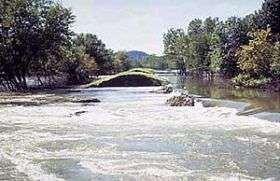
Midwesterners have to be wondering: Will April be the cruelest month? Patterns in the Midwest this spring are eerily reminiscent of 1993 and 1994, back-to-back years of serious flooding, with the Great Flood of 1993 causing nearly $20 billion of economic damage, damaging and destroying more than 50,000 homes and killing at least 38 people.
Parallels this year include abnormally high levels of precipitation in late winter and early spring and early flooding in various regions, such as the floods of late March in Missouri, Arkansas and Illinois and the Ohio River watershed. An unknown factor is the effect of the snow melt – Wisconsin, for instance, had record amounts of snow this winter – on river systems this spring and summer.
Despite the similarity in conditions, and periods of flooding nearly every year after those flood years more than a decade ago, one thing Midwesterners have not learned is “geologic reality,” says Robert E. Criss, Ph.D., professor of earth and planetary sciences in Arts & Sciences at Washington University in St. Louis.
“When people build commercial or residential real estate in flood plains, when they build on sink holes, when they build on fault lines, when they build on the hillsides in L.A. that are going to burn and burn, over and over again, they’re ignoring geologic reality,” Criss says. “They’re asking for chronic problems.”
Many homes in the St. Louis region along the Meramec River have suffered damage and some are still not habitable as spring comes to the area.
“Yes, the loss of and damage to homes is heartbreaking, and tragic, but it wasn’t that long ago, in 1994, that a flood of equal impact hit the region to inundate homes in the floodplain, and there was more severe flooding than that in 1982,” Criss says. “Flooding is what a river does on its geomorphic flood plain. It’s an obvious geologic mistake to build on a floodplain.”
How about putting up more levees, such as the 500-year levee at the St. Louis suburbs of Valley Park and Chesterfield, constructed by the U.S. Army Corps of Engineers?
“Building a levee for a community simply ‘certifies’ that this is a great place to build more things,” Criss says. “The Corps of Engineers will come in and claim it’s a 500-year levee, which is a claim they cannot make yet routinely do. That just encourages more infrastructure to move into these areas, when we should take the Times Beach and Valmeyer approach.”
Criss refers to the Missouri community of Times Beach, Mo., which was abandoned following the flood of the Meramec River in 1982, and Valmeyer, Ill., which moved off the Mississippi floodplain and was rebuilt up on the river bluff after the flood of 1993.
“An additional problem is that this is a starving world with comparatively little arable crop land,” he says. “I object from an environmental and geological point of view to converting some of the best crop land in the world to strip malls and commercial real estate. This is a bad swap and it’s using the land for the wrong reasons.”
Criss says that levees cause water to rise instead of spreading out and that the cumulative effect of levees and wing dykes on the large rivers north of St. Louis is beginning to manifest itself in flooding.
Criss says the claim that a levee will withstand floods for 500 years is “an absurd exaggeration. If some private company were making claims that they’ll sell you a car that will run for 500 years, they’d be in jail. Somehow, the government feels justified making absurd claims that have no basis.”
Criss says better zoning laws that encourage appropriate kinds of development for areas could be the solution to extreme flooding.
“Everyone screams for more levees, which only encourage more development,” he says. These structures are not infallible, and when the levees fail – and they will, carefully though they are built – we just have more infrastructure in harm’s way. It’s not a very thoughtful approach.
“We ignore the natural system in what we do. These are floodplains. What do we expect of floodplains? They’re great places to farm or construct a park. Losing crops that most likely are insured is different than losing millions of dollars per acre of buildings and infrastructure and, in some cases, lives.”
Source: Washington University in St. Louis


