Warming world holds new threats for Aussie wildlife
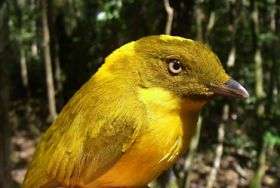
Climate change is likely to transform many of Australia’s natural landscapes, according to a new study by CSIRO scientists.
The report, Implications of Climate Change for the National Reserve System, was prepared for the Federal Government, and released today by Environment Minister Peter Garrett.
Author Dr Michael Dunlop says climate change is forcing environmental scientists to rethink their approach.
Temperatures over Australia are projected to rise by about 1 ºC by 2030, and 1.8 ºC by 2070, relative to 1990 levels.
“Traditionally, conservation has focussed on preventing change or restoring landscapes toward a pre-European state, but we now have to accept that change is inevitable, and it’s happening quite fast,” he says.
“Some animals and plants will be found in places where they’ve never been seen before, and others will disappear from areas where they were once common, and for many regions the look, sound, and smell of the landscapes we are familiar with will gradually change.”
The report confirms that Australia’s 9 000 protected areas are critical for nature conservation in a warming world, but Dr Dunlop says new protected areas will also be needed.
“There’s a lot we don’t yet understand, but we know more species will have a greater chance to adapt and survive if we protect:
-- as many different types of habitat as possible;
-- larger areas of habitat; and
-- locations that have historically provided a refuge for biodiversity during times of climatic stress.
National Park rangers and local conservationists will be on the front line in helping nature adapt to climate change, and Dr Dunlop warns they may be up against some new and worsening threats.
“For example: it will be harder to provide enough water at the right times to maintain wetlands; mangrove systems will be squeezed between urban areas and rising sea levels; and more frequent, intense fires may turn some forests to woodland, and some woodland to grasslands.
“We need to be vigilant against new exotic weeds and pests that will benefit from changing climates.
“One increasing challenge will be deciding how to respond when native species turn up in new areas and threaten local species,” he says.
Source: CSIRO


