Smelling a rat to catch a rat
Mar 24, 2008
Smelling a rat to catch a rat

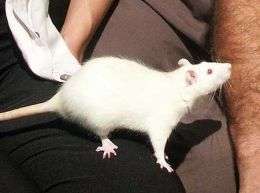
A novel experiment using laboratory rats to attract wild rats could pave the way for “rat perfumed” bait capable of reducing the millions of rats threatening New Zealand’s native species, say Massey conservation researchers.

Using caged lab rats as decoys, or “Judas” rats, Anna Gsell and Mark Seabrook-Davison, both Auckland-based PhD researchers at Massey’s Institute of Natural Resources, placed a series of cages near private bush on a farm north of Albany for their experiment.

The scientists recorded trails of paw prints - evidence that hordes of rats had scurried out of the bush to check out their caged cousins. They also used cages without actual rats but containing rat-scented bedding. These also attracted wild rats.

“The idea is based on the mate searching behaviour of rodents in the wild,” they say.

“We wanted to see whether we could use the odour of lab rats to attract wild rats,” says Ms Gsell, who hopes the positive results of the study will open the way for the commercial creation of a synthetic “rat perfume” from rat urine used in baits and traps.

Word of their study – carried out over the past four months at Mr Seabrook-Davison’s farm in Coatesville - has also reached the Department of Conservation. DOC recruited the researchers and their rats for an emergency rat-catching mission on a pest-free island in the Hauraki Gulf where a rogue rat was seen. The university’s “Judas” rats were walked on leashes around areas of the island, leaving their scent in the hope of attracting the vagrant wild rat, which was caught the following day 50 metres from where the rats were placed in cages.

Ms Gsell and Mr Seabrook-Davison say the results look very promising and could spell doom for the estimated millions of introduced Norway and Ship rats - major predators of many of New Zealand’s indigenous animals.

Source: Massey University

Explore further: Navy dolphins discover rare old torpedo off Calif. coast near Coronado

add to favorites email to friend print save as pdf

Related Stories

Neural activity in bats measured in-flight

Apr 18, 2013

Animals navigate and orient themselves to survive – to find food and shelter or avoid predators, for example. Research conducted by Dr. Nachum Ulanovsky and research student Michael Yartsev of the Weizmann ...

Losing wetlands to grow crops

Mar 24, 2013

Getting enough to eat is a basic human need – but at what cost to the environment? Research published in BioMed Central's journal Agriculture & Food Security demonstrates that as their crops on higher ground fail due to ...

Recommended for you

EU bans three pesticides harmful to bees

22 hours ago

The European Commission said Friday that it will ban for two years beginning in December pesticides blamed for killing the bees that pollinate food and fruit crops.

Studying the Noble King Mackerel

22 hours ago

They are sometimes called "smokers," due to the speed at which a fishing line zips out the reel and "smokes" after they hit on the bait.

User comments : 0

More news stories

EU bans three pesticides harmful to bees

The European Commission said Friday that it will ban for two years beginning in December pesticides blamed for killing the bees that pollinate food and fruit crops.

Yahoo, pay-TV operators among Hulu bidders

Online video site Hulu is again up for sale, with Yahoo and pay TV operators DirecTV and Time Warner Cable among the seven bidders, according to a person with direct knowledge of the matter.

Heart failure accelerates male 'menopause'

Heart failure accelerates the aging process and brings on early andropausal syndrome (AS), according to research presented today at the Heart Failure Congress 2013. AS, also referred to as male 'menopause', was four times ...

Radiation leak at Japan lab; small impact expected

An atomic research lab in northern Japan has reported a radiation leak that may have affected about 50 people, though none were hospitalized and no impact was expected outside the facility, the lab's operator ...