Netting mosquitoes to prevent malaria
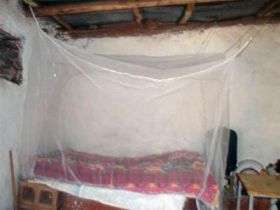
Michigan State University scientist Ned Walker is taking on one of the biggest killers in the world—malaria. And he believes he can help win the battle to save lives, especially the lives of children.
With a recent $1.7 million grant from the National Science Foundation, Walker will lead a research team studying how insecticide-treated bed nets can disrupt the population dynamics of the parasite that causes the deadly disease, as well as the mosquito that transmits the parasite. The scientists will focus on an area of western Kenya.
According to statistics from the World Health Organization, Malaria kills about 3,000 children each day in Africa. Research has shown that using bed nets may cut mortality in half.
A microbiology and molecular genetics and entomology researcher, Walker's research focuses on how infectious diseases are transmitted, especially those that use mosquitoes as a mechanism to spread.
"We'll be evaluating the effectiveness of the bed nets over the long term," Walker explained. "Malaria has resisted past attempts to control it. But the bed nets have emerged as a powerful and simple control tool. They only cost about $10 a piece. The big question is whether the bed nets will continue to work over time. That's what we'll be studying."
Bed nets have been high-profile recently. The Michigan State community, inspired by the work of Walker’s team, is rallying to raise funds to buy bed nets and have them distributed in Africa through the fundraising campaign Nothing But Nets. They’ve set a $10,000 goal.
So far, Anopheles gambiae, the mosquito species that is responsible for transmitting malaria to humans in Africa, hasn't demonstrated any resistance to the insecticide used in the bed nets.
"It appears that the Anopheles gambiae population declines and doesn't recover," Walker said. "So the parasites that cause malaria shift into a different mosquito that feeds mainly on cattle. Since these mosquitoes don't bite people as often and cattle don't support the malaria infection, malaria transmission goes way down."
Walker and his colleagues also will be looking at the population structure of the malarial parasites to see how the population responds to decreasing mosquito populations.
"The parasites have a deep population structure—males outnumber females by about 8 to 1," Walker explained. "If there is a drop in total parasite numbers, it could be even harder for the parasites to mate."
According to Walker, this is important for two reasons. Malarial parasites are notorious for developing antibiotic resistance.
Restricting the population would restrict the gene flow, which would limit spread of the resistance. Walker's team will be using genetic markers to track the flow of genes. Second, when malaria transmission goes down, it tends to be the more virulent strains of the disease that survive.
"We don't want that to happen, so we'll be studying virulence factors to monitor it," Walker said.
The study also will examine how well people accept and use bed nets in their daily routines.
"I'm very excited to begin the project," he continued. "Bed nets are an inexpensive, easy-to-use method to control the disease. This research is international in scope and will help us help people, which is one of our land-grant principles."
Source: Michigan State University


