November 12, 2007 weblog
Light Corp. Unveils Wireless Lighting Control System
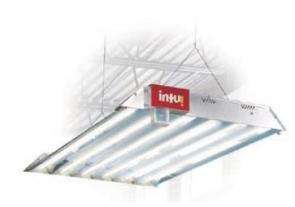
Light Corp., a company from Grand Haven, Michigan, is launching a lighting control system that allows users to remotely control the lighting in industrial buildings. The system, called Intu, is inexpensive and easy to install, as the technology is completely wireless.
Because Light Corp. focuses on industrial lighting, the system is being developed primarily for large warehouses, factories, and office buildings. However, one day the technology could be applicable for household use, and would be akin to turning your lights on or off with your laptop rather than the switch on the wall.
The "Intu: 360° Workspace Agility" system works by using a wireless mesh network of nodes and sensors. Brick-size nodes are attached to lighting fixtures on the ceiling, while smaller sensors are positioned around the plant to detect varying levels of lighting. The light (dimming, timing, etc.) can then be controlled from an on-site or off-site computer instead of manually operating lights in various locations. The Intu server is hosted off-site by Light Corp., eliminating the need for IT assistance.
"It´s a whole new paradigm shift of how you can build a building from the electrical perspective," said Larry Leete, director of sales and marketing at Light Corp. "You never have to touch circuits again."
One of the greatest advantages of the system is its potential for energy savings. The sensors allow the fluorescent lights to be turned on and off automatically, depending on daylight levels and/or occupancy of the workspace. Adjusting the brightness in accordance with incoming sunlight could result in energy savings up to 60%.
Light Corp., though founded fairly recently in 1986, is trying to stay one step ahead of some of the bigger-name companies—such as General Electric and Phillips—with the first large-scale wireless light-control system on the market. Currently, the product is unique, but Light Corp. is already looking for areas of improvement.
For instance, future versions of Intu could include allowing operators to use the sensors to control temperature, for security monitoring, and for machine health monitoring. Another application is data mining, using the sensors to help companies gather information about plant operations.
Via: Grand Rapids Press
More information: LightCorp.com


