'Microplastics' may pose previously unrecognized pollution threat
Oct 29, 2007
'Microplastics' may pose previously unrecognized pollution threat
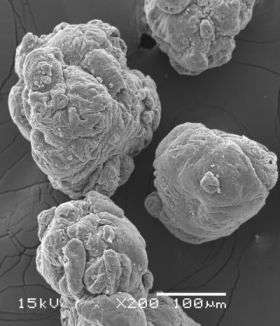
Submicroscopic particles of PVC (shown via electron microscope) and other plastics may pose a previously unrecognized pollution threat. Credit: Courtesy of Emma Teuten, University of Plymouth, UK

Microscopic particles of plastic debris that litter marine environments may pose a previously unrecognized threat to marine animals by attracting, holding, and transporting water pollutants, a new study by British researchers is reporting. It is scheduled for the Nov. 15 issue of ACS' Environmental Science & Technology.

Emma L. Teuten and colleagues note long-standing awareness that large pieces of plastic waste, including cargo wrapping sheet plastic and six-pack rings, can sicken and kill fish, birds, turtles and other animals. Seawater eventually breaks down these large pieces into microplastics, which can adsorb high levels of PCBs and other toxins.

Microplastics also enter the environment directly from use as "scrubbers" in household and industrial cleaning products. However, little research has been done on the environmental impact of these tiny, pollution-packed pellets.

In the new study, researchers exposed several different types and sizes of microplastics to phenanthrene, a major marine pollutant, and used a model to predict their effects on a group of sediment-dwelling marine worms (lugworms).

The scientists found that addition of just a few millionths of a gram of contaminated microplastics to the sediments caused an 80% increase in phenanthrene accumulation in the tissues of the worms.

Since lugworms are at the base of the food chain, phenanthrene from microplastics would be passed on and biomagnified in other marine animals. The finding suggests that microplastics are an important agent in the transport of pollutants in marine organisms and throughout the global environment, the researchers say.

Source: ACS

Explore further: Explainer: What are chemical weapons?

add to favorites email to friend print save as pdf

Related Stories

Microplastics endanger ocean health

May 17, 2012

Tiny pieces of plastic contaminate almost every sea in the world. Now scientists have found that marine creatures like fish and birds are eating this microscopic waste, which may be harming their health.

The sea as a rubbish tip

Apr 17, 2012

Biologists have prepared guidelines for a more precise investigation into marine pollution from microplastic particles.

Microbial answer to plastic pollution?

Mar 28, 2010

Fragments of plastic in the ocean are not just unsightly but potentially lethal to marine life. Coastal microbes may offer a smart solution to clean up plastic contamination, according to Jesse Harrison presenting ...

Recommended for you

Explainer: What are chemical weapons?

May 24, 2013

There was chaos on the streets of Halajba in March 1988. In this corner of Iraq, at the time Iraqi Kurdistan, people had suddenly started experiencing cold-like symptoms – tight chest and nasal congestion. ...

Scientists develop advanced biological computer

May 24, 2013

(Phys.org) —Using only biomolecules (such as DNA and enzymes), scientists at the Technion-Israel Institute of Technology have developed and constructed an advanced biological transducer, a computing machine capable of manipulating ...

Research aims to fix long-held, inaccurate insect model

May 24, 2013

(Phys.org) —In humans, a polymer called melanin determines skin, eye and hair color—the darker the skin, the more melanin in a person's body. For insects, melanin is a major aspect of their immune defense ...

Molecular modelling to help create better, safer drugs

May 24, 2013

(Phys.org) —How our bodies break down the common drugs ibuprofen, diclofenac and warfarin is the subject of a new study from the University of Bristol, published in the Journal of the American Chemical So ...

User comments : 0

More news stories

New method for producing clean hydrogen

Duke University engineers have developed a novel method for producing clean hydrogen, which could prove essential to weaning society off of fossil fuels and their environmental implications.

Scientists develop advanced biological computer

(Phys.org) —Using only biomolecules (such as DNA and enzymes), scientists at the Technion-Israel Institute of Technology have developed and constructed an advanced biological transducer, a computing machine capable of manipulating ...

Yahoo, pay-TV operators among Hulu bidders

Online video site Hulu is again up for sale, with Yahoo and pay TV operators DirecTV and Time Warner Cable among the seven bidders, according to a person with direct knowledge of the matter.