Researchers power up new lithium battery for hybrid cars
Researchers at MIT have developed a new type of lithium battery that could become a cheaper alternative to the batteries that now power hybrid electric cars.
Until now, lithium batteries have not had the rapid charging capability or safety level needed for use in cars. Hybrid cars now run on nickel metal hydride batteries, which power an electric motor and can rapidly recharge while the car is decelerating or standing still.
But lithium nickel manganese oxide, described in a paper to be published in Science on Feb. 17, could revolutionize the hybrid car industry -- a sector that has "enormous growth potential," says Gerbrand Ceder, MIT professor of materials science and engineering, who led the project.
"The writing is on the wall. It's clearly happening," said Ceder, who said that a couple of companies are already interested in licensing the new lithium battery technology.
The new material is more stable (and thus safer) than lithium cobalt oxide batteries, which are used to power small electronic devices like cell phones, laptop computers, rechargeable personal digital assistants (PDAs) and such medical devices as pacemakers.
The small safety risk posed by lithium cobalt oxide is manageable in small devices but makes the material not viable for the larger batteries needed to run hybrid cars, Ceder said. Cobalt is also fairly expensive, he said.
The MIT team's new lithium battery contains manganese and nickel, which are cheaper than cobalt.
Scientists already knew that lithium nickel manganese oxide could store a lot of energy, but the material took too long to charge to be commercially useful. The MIT researchers set out to modify the material's structure to make it capable of charging and discharging more quickly.
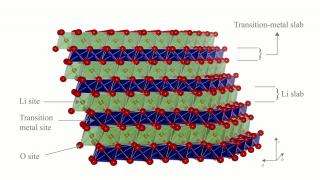
Lithium nickel manganese oxide consists of layers of metal (nickel and manganese) separated from lithium layers by oxygen. The major problem with the compound was that the crystalline structure was too "disordered," meaning that the nickel and lithium were drawn to each other, interfering with the flow of lithium ions and slowing down the charging rate.
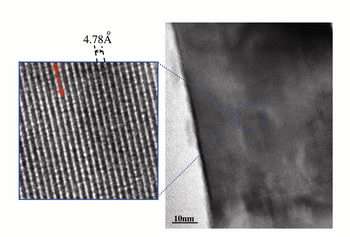
Lithium ions carry the battery's charge, so to maximize the speed at which the battery can charge and discharge, the researchers designed and synthesized a material with a very ordered crystalline structure, allowing lithium ions to freely flow between the metal layers.
A battery made from the new material can charge or discharge in about 10 minutes -- about 10 times faster than the unmodified lithium nickel manganese oxide. That brings it much closer to the timeframe needed for hybrid car batteries, Ceder said.
Before the material can be used commercially, the manufacturing process needs to be made less expensive, and a few other modifications will likely be necessary, Ceder said.
Other potential applications for the new lithium battery include power tools, electric bikes, and power backup for renewable energy sources.
Source: MIT


