UCSD Biologists Find New Evidence for One-Way Evolution
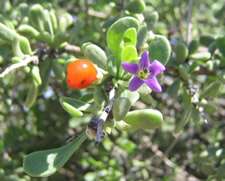
By tracing the 30-million year history of variation in a gene found in plants such as tomatoes and tobacco, biologists at the University of California, San Diego have found new evidence to support an old idea — that some evolutionary changes are irreversible.
Their study, published this week in an early online edition of the journal Proceedings of the National Academy of Sciences, offers new support for the idea that the loss of complex traits, like eyes, wings or in this case a reproductive mechanism, is often irreversible. In other words, once lost, the traits never revert to their original state.
"This is the strongest evidence yet to support irreversibility,” said Joshua Kohn, an associate professor of biology at UCSD who headed the study. "If we had not used the genetic data coding for this reproductive mechanism and only inferred the pattern of evolution based on the traits of living species, we would have come to the opposite conclusion and with high statistical support — that the trait evolved more than once.”
The scientists examined existing variation in the gene used by many members of the Solanaceae family, which include tomatoes and tobacco, to recognize and reject their own pollen, thereby avoiding self-fertilization and the harmful effects of inbreeding. This ability is sometimes lost, as is the case for garden tomatoes, which can set seed by self-fertilization. Apparently, once lost, the ability to reject pollen in order to prevent self-fertilization is never regained.
Irreversible loss of complex traits, which result from the combined interaction of several genes, is an old and at times controversial scientific question. While the late evolutionary biologist Stephen Jay Gould popularized the hypothesis of irreversibility, known as Dollo's Law, studies that use current methods to reconstruct the evolution of complex traits often fail to support it. This is because it is often difficult to reconstruct characteristics of extinct ancestors with any certainty.
The study contradicts earlier studies of complex trait evolution, which have tended to favor multiple reappearances of complex traits after these organs were lost in ancestral species. The authors suggest that traditional methods for reconstructing the history of trait evolution may be inaccurate.
Discovering irreversible change for this sexual system trait highlights the importance of considering genetic data underlying the trait when reconstructing its evolutionary history.
“Our work implies that evidence for such evolutionary change in other cases may have been missed because the current methods aren’t sufficiently refined,” said Boris Igic, who conducted the study while a graduate student at UCSD and is now a postdoctoral fellow at Cornell University.
While lending support to the question of unidirectional evolution, the biologists’ findings also lead to new questions.
“Apparently, plants that have sex exclusively with other plants and not themselves, enjoy a greater evolutionary advantage,” Igic said. “Exactly why is unclear,”
Species capable of rejecting their own pollen in favor of pollen from other individuals, harbor more genetic variation than those that self-fertilize.
“An intriguing aspect of this study is that the mechanism for ensuring cross-fertilization is very old, often lost, and never regained,” Kohn said. “That it is still common despite frequent and irreversible loss implies that this trait confers an advantage to species that possess it, perhaps in terms of reduced rates of extinction.”
The study was supported by a grant from the National Science Foundation.
Source: University of California, San Diego


