Organic rice research moves to front burner in Texas
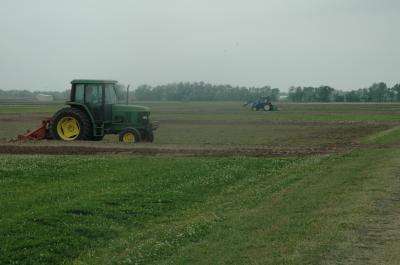
Organic rice studies have moved to the front burner with almost $1 million in federal grants to Texas A&M AgriLife Research scientists.
Two studies, led by Dr. Fugen Dou of Beaumont – and a team from College Station, Corpus Christi, Arkansas, Alabama and South Carolina—will look at yielding more high quality organic rice in an environmentally friendly way. The research projects are funded by the U.S. Department of Agriculture.
Currently some 50,000 acres of organic rice are grown annually in the U.S., the researchers noted, and demand has continued to increase.
"Although conventional rice production has decreased in Texas by about 36 percent in the last 15 years," Dou said, "the state now has about 15,000 acres of organic rice and is revitalizing the rice industry.
But there are many unknowns about growing the crop organically, he said. And, because all U.S. rice is grown in flooded rice paddies, organic production methods developed for other crops do not pertain to rice farming.
The biggest of two grants will be an almost $727,000 study to look at reducing greenhouse gas emission on organic rice farms.
"Organic rice farming may have greater potential for soil carbon sequestration but may also result in greater greenhouse gas emissions because of greater input of organic matter," Dou explained.
He said the research will look at the use of cover crops, organic soil amendments and the choice of varieties to improve soil quality, reduce disease loss and increase yield and milling quality.
Dou has done previous research to help rice farmers determine the best management practices for growing the crop organically. In those, the researcher found that ryegrass and clover performed better than other winter cover crops on clay soils. He also found two organic soil amendments – Nature Safe and Rhizogen – increased yield and milling quality better than other organic fertilizers.
The rice variety also made a difference in yield when grown organically, Dou said.
While those findings were conclusive individually, Dou noted, there had not been research to determine how these practices impacted each other when applied together.
"With this research, we will look at the effect of cover crops, organic soil amendments and the variety of rice on yield, milling quality, soil carbon sequestration and greenhouse gas emissions," he said.
The second study will use $225,000 to examine the severity of disease in rice crops in Texas and South Carolina, specifically at the impact of dissolved organic carbon, nitrogen and phosphorous concentrations and salinity on water quality.
Dou said the researchers also will develop budgets to determine the best management practices to use to get the maximum economic return for the investment.
Both projects will be conducted through 2015.
Provided by Texas A&M University


