Autopsy carried out on giant Philippines crocodile
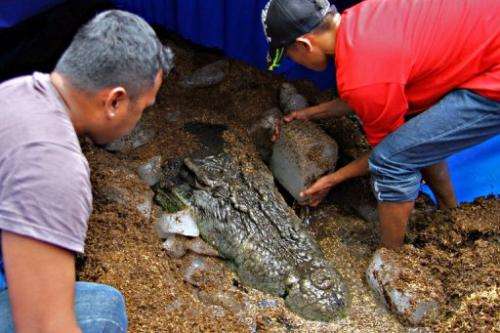
Philippine veterinarians conducted an autopsy on the world's largest saltwater crocodile ever caught, amid concerns it died of mistreatment in a small pen where it was on show for tourists.
"Lolong", who measured 6.17 metres (20.24 feet), died from a mystery illness on Sunday inside his small enclosure in the southern Philippines, where he had been on display since being caught in marshlands in 2011.
"We want to find out the real cause of death so there will be no misinformation and speculation," Mundita Lim, head of the Protected Areas and Wildlife Bureau, told AFP, explaining why the autopsy was carried out.
Lim said that the full results would not be known until the end of the week.
However the veterinarians found no traces of foreign material inside Lolong, debunking prominent press reports that it died after eating a plastic and nylon cord.
People for the Ethical Treatment of Animals (PETA) blamed extreme stress for Lolong's death, pointing out that large crocodiles were used to roaming vast ranges in its natural habitat.
"Lolong suffered and died because people wanted to make money off his captivity," PETA said in a statement.
Lim did not want to comment directly on PETA's claim until the results of the autopsy were known, although she acknowledged that crocodiles were known to live up to 100 years in the wild, while Lolong was only about 60.
Lolong, of the species Crocodylus Porosus, was hunted and caught in a marshland near the impoverished town of Bunawan in September 2011 after it was suspected of biting the head off a school girl and of eating a fisherman.
Its capture made the town famous, and Lolong became a tourist attraction and one of the local government's most important money earners.
The Guinness Book of World Records named Lolong the world's biggest saltwater crocodile in captivity, dislodging Cassius, a 5.48-metre crocodile kept in a park in Australia.
Cassius' handlers were celebrating Tuesday, saying the huge reptile regaining his title as the biggest crocodile in captivity would be good for business.
(c) 2013 AFP


