24 new species of flower fly found in Central and Southern America
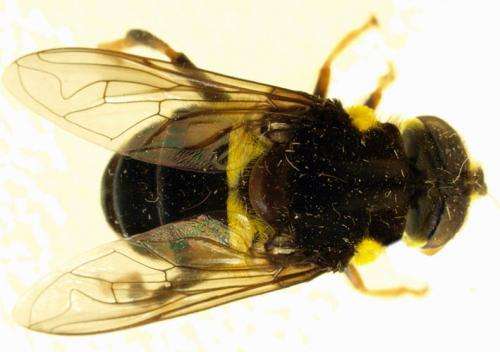
A team of scientists have described twenty four new species of dipterans belonging to Quichuana genus, of which only a further 24 species were known. The researchers, including two Spanish biologists, have been studying the forests of Central and Southern America for ten years and they have now published their results in the Zoological Journal of the Linnean Society.
A ten-year study in forests of the American continent has resulted in the description of 24 new insect species from the Quichuana genus that are also known as 'flower flies'.
Up until now only a further 24 species were known and this genus belongs to the Syrphidae family, which is a group with similar characteristics to that of bees and wasps but with a different taxonomic order. The study has been published in the 'Zoological Journal of the Linnean Society'.
As explained to SINC by María Ángeles Marcos-García, researcher at the Ibero-American Biodiversity Centre (CIBIO) of the University of Alicante and one of the authors of the study, the species of the Quichuana genus are "not well known as they live in tropical forest areas where insect studies are scarce."
Numerous studies in these forests have been carried out in the last ten years that aim to "understand and provide useful data for supporting conservation measures in those areas that are home to such high levels of biodiversity," explains the biologist.
Double the amount of Quichuana species
Thanks to these studies, 24 more species have been discovered, meaning that the number of documented species in this genus has doubled.
"Some specimens were captured as adults while in flight whereas others were taken as larva and were then raised in our laboratories as adults," outlines the researcher.
In this way it was possible to find out how larvae "live in small cumuli of water retained in different parts of the plant" and how "a relationship has been established between the insect species and their plant development environment," adds the researcher.
According to the author the discovery of this insect-plant relationship is "especially important for establishing conservation methods, both for these species and others that share the same development environment."
According to the entomologist, "hoverflies are present in practically all terrestrial ecosystems and they carry out very important biological functions, such as pollination, nutrient recycling and biological control of plagues as their larvae feed on other insects that are damaging to crops and ornamental plants, such as plant louses."
More information: Ricarte, A. et al. Revision of the New World genus Quichuana Knab, 1913 (Diptera: Syrphidae), including descriptions of 24 new species. Zoological Journal of the Linnean Society. 2012, 166, 72-131. doi: 10.1111/j.1096-3642.2012.00842.x
Provided by Plataforma SINC


