Scientists develop prediction tools to model impact of policies aimed at reducing our ecological footprint
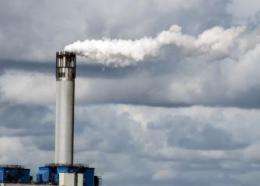
Scientists keep producing increasingly complex modelling tools to evaluate urgently needed mitigating strategies of our carbon footprint. However, it is policy makers who have to decide on measures to curb our CO2 emissions. Therefore the science of carbon emissions needs to be translated into useful information to serve their needs.
The problem is that the ongoing scientific debate and the conflicting results of more than 30 scientific models for climate change cannot support rational policy decision making. A unique tool called EUREAPA was therefore developed to help policy makers in their decisions. It resulted from a research project funded by the EU, called OPEN:EU, coordinated by the World Wide Fund for Nature (WWF).
This tool models the carbon footprint of human activities. It also provides average consumption at a national level for production sectors such as housing, food and transport. Most importantly, it allows users to develop their own scenarios. Experts welcome this development. "A full integrative approach is required to address the realistic potential and effectiveness of carbon mitigation options," Josep Canadell says. He is a research scientist at the Commonwealth Scientific and Industrial Research Organisation (CSIRO), Canberra, Australia.
Compared to other tools, what differentiates this solution is that this project included extensive consultation with relevant stakeholders. For example, Sirpa Pietikäinen, Finnish member of the European Parliament, tested it and welcomes it: "[This tool] forms the backbone of any sound analysis in planning for the sustainability challenge," she declared.
Many relevant stake holders are already using the tool. Rachel Brown, project manager at WWF UK in Godalming, claims to have more than 100 registered users: "It was our goal not only to develop EUREAPA, but also to gain commitment from policy makers to use the tool." She is confident this application will support policy making to reduce CO2 emissions.
To date, however, expert have not observed an uncoupling of CO2 emissions from economic growth, that would be the hallmark of sustainable change. Therefore some believe that to tackle the climate change challenge, a focus on mitigation strategies is not sufficient. "An adequate policy towards climate change is minimising negative and exploiting positive effects," points out Reinhard Böhm expert for climate variability at the Central Institute for Meteorology and Geodynamics in Vienna, Austria.
Source: Youris.com


