Natural fungus may provide effective bed bug control
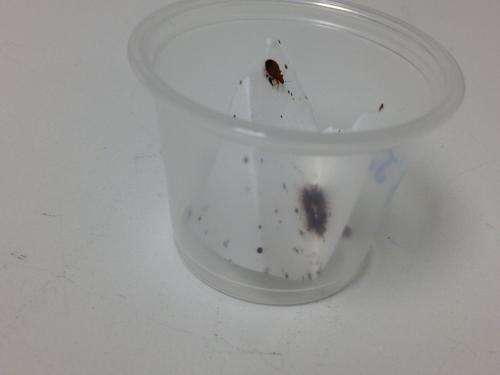
"And don't let the bed bugs bite" is no longer a harmless adage. In reality today, these bloodthirsty bugs infest thousands of homes. According to a team of Penn State entomologists, biopesticides—naturally occurring microorganisms—might provide an answer to this pest problem. Bed bugs need blood meals for growth and development throughout their life cycle. Increased travel, widespread insecticide resistance and changes in management practices have caused a resurgence in those insects throughout North America and Europe. Compounding the problem are concerns about the safety of using traditional chemicals in the domestic environment.
According to Nina Jenkins, senior research associate in entomology, preliminary bioassays on the effects of Beauveria bassiana—a natural fungus that causes disease in insects—on bed bug control have been performed, and the results are encouraging. She and her colleagues report their results in the most recent issue of the Journal of Invertebrate Pathology.
Jenkins, working with Alexis Barbarin, a former Penn State postgraduate student now at the University of Pennsylvania, Edwin Rajotte, professor of entomology, and Matthew Thomas, professor of entomology, looked at how B. bassiana acts through contact with its insect host.
"They are natural diseases that exist in the environment," said Jenkins. "They are relatively easy to produce in a lab and stable, so you can use them much like chemical pesticides."
In the study, the researchers used an airbrush sprayer to apply spore formulations to paper and cotton jersey, a common bed sheet material. Then control surfaces, again paper and cotton jersey, were sprayed with blank oil only. The surfaces were allowed to dry at room temperature overnight. Three groups of 10 bed bugs were then exposed to one of the two surfaces for one hour. Afterward, they were placed on clean filter paper in a petri dish and monitored.
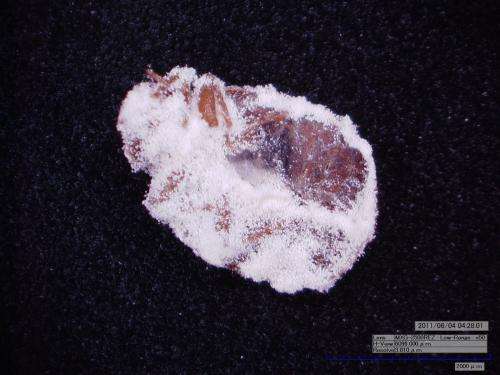
The researchers found that all of the bed bugs exposed to the biopesticide became infected and died within five days.
Also, there were no prominent differences in susceptibility by feeding status, sex, strain or life stage. Most importantly, the infected bed bugs carried the biopesticide back to their hiding places, infecting those that did not go out in search of blood.
"We exposed half of a population of bed bugs to a spray residue for one hour and then allowed them to go into a harborage with unexposed individuals," said Jenkins. "The fungal spores were transferred from the exposed bug to their unexposed companions, and we observed almost a hundred percent infection. So they don't even need to be directly exposed, and that's something chemicals cannot do."
This result is important because bed bugs live in hard-to-reach places.
"Bed bugs tend to be cryptic, and they'll hide in the tiniest crevices," said Jenkins. "They don't just live in your bed. They hide behind light switches and power sockets and in between the cracks of the baseboard and underneath your carpet."
The speed of mortality with B. bassiana is as fast as Jenkins has seen in any application, but it doesn't even need to be that fast.
"If you are trying to protect a farmer's field, he wants the insects that are eating his crop dead immediately," said Jenkins. "Obviously, if you have bed bugs in your house, you don't want them there for any longer than you have to, but what you really want to know is if they've all gone at the end of the treatment, and I think that's something that this technology could offer."
Next, the researchers will test the effectiveness of brief exposure times and look at entire populations where natural harborages are established. Then they will begin field work.
"It's exciting, and it definitely works," said Jenkins. "We're working on the next step, and we have more funding to support these studies."
Provided by Pennsylvania State University


