Ingredient in diarrhea medicine leads to sustainable new farm fertilizer
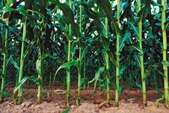
The search for a sustainable slow-release fertilizer—a key to sustaining global food production at a time of burgeoning population growth—has led scientists to an ingredient used in some diarrhea medicines. They describe use of the substance, attapulgite, as a "carrier" for plant nutrients in a report in ACS' journal Industrial & Engineering Chemistry Research.
Boli Ni and colleagues explain that about half of the 150 million tons of fertilizer used worldwide every year goes to waste. That's because most fertilizers release nutrients too fast for the crops to use. The rest can run off farm fields and create water pollution problems. Existing slow-release fertilizers have drawbacks. So Ni's team turned to the environmentally friendly substance attapulgite, an inexpensive, nutrient-rich clay used for decades to treat diarrhea and for other applications. It once was an ingredient in the Kaopectate marketed in the United States. They also included guar gum, used in cosmetics and to thicken foods, and humic acid from decayed plant material.
The report describes development and successful tests of a new fertilizer composed of those three ingredients. The slow-release pellets were easy to prepare, reduced nutrient loss via runoff and leaching, improved soil moisture content and regulated soil acidity and alkalinity. "All of the results indicate that it may be expected to have wide applications for sustainable development of modern agriculture," the scientists say.
More information: "Novel Multinutrient Fertilizer and Its Effect on Slow Release, Water Holding, and Soil Amending" Ind. Eng. Chem. Res., 2012, 51 (40), pp 12993–13000. DOI: 10.1021/ie3003304
Abstract
This study was carried out to develop a novel slow-release fertilizer, which is based on natural attapulgite (APT) clay as a matrix, guar gum (GG) as an inner coating, and guar gum-g-poly(itaconic acid-co-acrylamide)/humic acid (GG-g-P(IA-co-AM)/HA) superabsorbent polymer as an outer coating. The coated compound fertilizer granules with diameter in the range of 2–3 mm possess low moisture content and high mechanical hardness. The effects of APT matrix, GG, and superabsorbent polymer coatings on nutrients release were explored. The influence of the product on water-holding capacity of soil was determined. The degradation behavior of the GG-g-P(IA-co-AM)/HA outer coating was assessed by examining the weight loss with incubation time in soil. The experimental data and analysis in this study indicated that the product prepared by a simple route can effectively reduce nutrient loss in runoff or leaching, improve soil moisture content, and regulate soil acidity and alkalinity level.
Journal information: Industrial & Engineering Chemistry Research
Provided by American Chemical Society


