A future full of robots
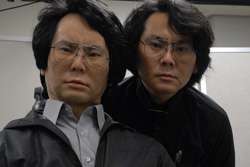
A future where robots are as common as cars – and cheaper – is on the way. This is according to Prof. Hiroshi Ishiguro, named one of the top 100 geniuses alive in the world today, who has devoted himself to creating robots so humanlike it's hard to tell the difference.
"In the future, our lives will be full of robots," he says.
Ishiguro's lecture about the possibilities for the relationship between humans and robots attracted a packed audience. He compared the evolution of robots to the evolution of cars. "Once we have developed practical robots, we can spend more and more time building autonomy," he said.
Autonomous androids which look just like you could conduct your business, attend conferences, and go shopping on your behalf, while you sat in the comfort of your home. A camera would monitor your facial expressions and your android's face would mirror your expressions. Ishiguro says there is even a psychological phenomenon whereby, if someone touches your android, you feel it. "It's a very tactile sensation," he says.
Ishiguro has previously left his twin android, developed at a cost of $1 million, to deliver pre-recorded lectures at his place of employment, Osaka University in Japan, while he went overseas. He also – when doubled booked for a conference – emailed the conference organisers to say that he would have to send his android to one of the events. Both conferences replied: "We want the android!"
Ishiguro has subsequently developed androids at a cost of $100 000 – the price of a luxury car. They look and feel just like humans - with very realistic skin, hair and facial and body movements.
In one experiment, he put an android instead of a mannequin in a shop window in Japan. "The idea of a mannequin is to show the future. Do you want to be a mannequin in the future? But no human will stand in a shop window. So we put an android in the shop window," he says. Aside from gaining hundreds of Twitter followers, Geminoid-F (as she is known) managed to clear the shop racks of every outfit she wore. "Everyone wanted the clothes of the android," says Ishiguro.
In another experiment, an android was made to read the evening news. "No one could tell the difference," says Ishiguro. "That means we don't need newscasters – just androids."
The big driver in Ishiguro's research is an interrogation of what it means to be human, and whether it is important for the robots we engage with to look like humans. "Our brain is not for using computers; our brain is for recognising humans. Young children can't use a computer, but they can interact with a robot," says Ishiguro.
In response to a question about the threat of robots taking over, Ishiguro said the western world's fear of robots, as represented in movies such as The Terminator and Blade Runner, was totally foreign to the Japanese, who saw robots as benign and friendly. In fact, isn't South African favourite Oscar Pistorius a kind of cyborg?
Provided by Wits University


