Britain scrambles to contain deadly ash tree disease
Nov 02, 2012
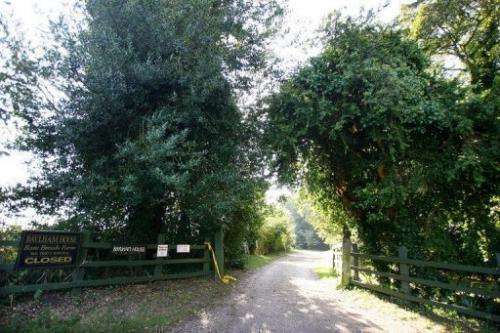
File picture of the entrance to a farm in Suffolk, eastern England. The British government convened its emergency crisis committee on Friday to discuss how to contain a fungal disease threatening ash trees that has already wiped out swathes of woodland in Denmark.

The British government convened its emergency crisis committee on Friday to discuss how to contain a fungal disease threatening ash trees that has already wiped out swathes of woodland in Denmark.

The Chalara fraxinea has been present in European for the past two decades, destroying up to 90 percent of the species in some areas of Denmark, and has now been found in Britain.

Ministers announced a ban on the import of ash trees on Monday as well as restrictions of the movement of the trees, its plants and seeds within Britain, but there were fears it could already have spread.

The crisis has revived memories of , which devastated Britain's elm trees in the 1970s. About 100,000 ash trees have been destroyed so far in an attempt to halt the spread of the , which first appeared in Britain in February in a consignment of imported trees in a nursery.

Last month it was identified in ash trees in the wider countryside in eastern England.

Britain has about 130,000 hectares (320,000 acres) of predominately ash tree woodland, comprising about 5.5 percent of its woods, with a further 12 million ash trees outside woods and forests, according to the Forestry Commission.

The trees have high , as their light and airy canopy allows sunlight through to the woodland floor to enable a rich and varied ground flora to grow. This in turn provides food for a wide variety of insects and birds.

Environment Secretary Owen Paterson chaired a meeting of the government's crisis committee, Cobra, on Friday to discuss how to manage the problem with government's chief scientific advisor and forestry and environmental officials.

Speaking earlier this week, Paterson said: "This is a very serious disease that demands action to stop its spread."

Explore further: UK to ban ash tree imports to halt disease spread

add to favorites email to friend print save as pdf

Related Stories

Cornell leads fight against invasive emerald ash borer

Sep 02, 2010

Cornell University is leading efforts to manage outbreak populations of the emerald ash borer (EAB), a beetle that has the potential to devastate ash trees in the Northeast. The new invasive species is already ...

Recommended for you

Encouraging signs for bee biodiversity

3 hours ago

Declines in the biodiversity of pollinating insects and wild plants have slowed in recent years, according to a new study. Researchers led by the University of Leeds and the Naturalis Biodiversity Centre in the Netherlands ...

Dubai seizes 259 smuggled African ivory tusks

14 hours ago

A shipment of 259 elephant tusks smuggled out of Africa has been seized in the United Arab Emirates, the International Wildlife Fund for Animal Welfare said Tuesday.

User comments : 0

More news stories

Encouraging signs for bee biodiversity

Declines in the biodiversity of pollinating insects and wild plants have slowed in recent years, according to a new study. Researchers led by the University of Leeds and the Naturalis Biodiversity Centre in the Netherlands ...

If you can remember it, you can remember it wrong

(Medical Xpress)—Native peoples in regions where cameras are uncommon sometimes react with caution when their picture is taken. The fear that something must have been stolen from them to create the photo ...

B vitamins could delay dementia

(Medical Xpress)—Despite spending billions of dollars on research and development, drug companies have been unable to come up with effective treatments for dementia and Alzheimer's Disease (AD). Now, A. ...

New method for producing clean hydrogen

Duke University engineers have developed a novel method for producing clean hydrogen, which could prove essential to weaning society off of fossil fuels and their environmental implications.