Super-microbes engineered to solve world environmental problems
Environmental problems, such as depleting natural resources, highlight the need to establish a renewable chemical industry. Metabolic engineering enhances the production of chemicals made by microbes in so-called "cell factories". Next Monday, world class scientist Professor Sang Yup Lee of KAIST (Korea Advanced Institute of Science and Technology) will explain how metabolic engineering could lead to the development of solutions to these environmental problems.
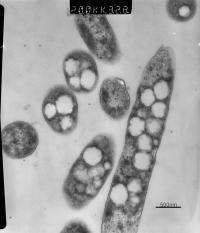
For example, the polyester polylactic acid (PLA) is a biodegradable material with a wide range of uses, from medical implants, to cups, bags, food packaging and disposable tableware. It and its co-polymer can be produced by direct fermentation of renewable resources using metabolically engineered Escherichia coli.1
Microorganisms isolated from nature use their own metabolism to produce certain chemicals. But they are often inefficient, so metabolic engineering is used to improve microbial performance. Beginning in the 1990s, metabolic engineering involves the modification of microbial cells to enhance the production of what's known as a bioproduct. This bioproduct can be something that the cell produces naturally, like ethanol or butanol. It can also be something that the cells mechanisms can produce if their natural metabolic pathways are altered in some way. The range of uses of this bioproduct can be broadened through metabolic engineering, which can also optimize the overall process of bioproduct synthesis.
Recently, metabolic engineering has become more powerful, through the integration of itself with systems and synthetic biology. Systems biology is a relatively new approach to biological research which looks at the complex interactions within whole cell systems. It allows cell-wide understanding of metabolic reactions and the way these are regulated by the cell's genes.
Synthetic biology is another new approach that designs and constructs new biological functions and systems that aren't found in nature. It allows the design of new genes, modules and circuits that can be used to modulate the cells metabolism to make more of the desired bioproduct. So systems metabolic engineering can now develop superior microorganisms much more efficiently through the integration of itself with systems biology and synthetic biology.
Professor Lee will introduce general strategies for systems metabolic engineering which will be accompanied by many successful examples, including the production of chemicals, fuels and materials such as propanol, butanol, 1,4-diaminobutane, 1,5-diaminopentane, succinic acid, polyhydroxyalkanoates, and polylactic acid.
Professor Sang Yup Lee said: "Bio-based production of chemicals and materials will play an increasingly important role in establishing a sustainable world. To make the bioprocess efficient and economically competitive, it is essential to improve the performance of microorganisms through systems metabolic engineering. From industrial solvents to plastics, an increasing number of products of everyday use will be produced through bioprocesses."
Professor Lee will present the 5th Environmental Microbiology Lecture on 8 October 2012 at the Royal Society of Medicine, 1 Wimpole Street, London W1G 0AE. Registration begins at 17.30 and the lecture will start 18.30. There will be a drinks reception after the lecture at 19.30 - 20.30.
More information: 1 Yu Kyung Jung, Tae Yong Kim, Si Jae Park, Sang Yup Lee. Metabolic engineering of Escherichia coli for the production of polylactic acid and its copolymers. Biotechnology and Bioengineering Volume 105, Issue 1, pages 161-171, 1 January 2010 DOI:10.1002/bit.22548
Journal information: Biotechnology and Bioengineering


