Skydiver begins prep for supersonic jump: Watch it live
by Jeri Clausing
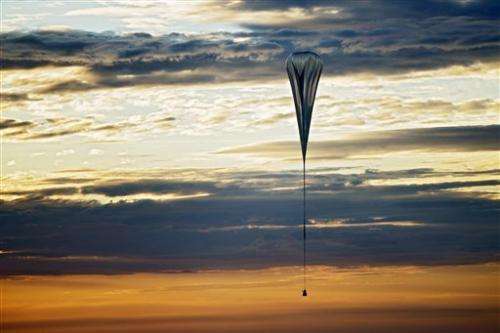
In this July 25, 2012 photo provided by Red Bull Stratos, a balloon lifts up during the second manned test flight for Red Bull Stratos in Roswell, N.M. It's described as a "40-acre dry cleaner bag," that, when first filled, will stretch 55 stories high. On Monday, this special ultra-thin helium balloon is scheduled to liftoff from Roswell, N.M., to carry "Fearless Felix" Baumgartner 23 miles into the stratosphere for what he hopes will be a history-making, sound barrier-breaking skydive. (AP Photo/Red Bull Stratos)
A weather hold that threatened to cancel extreme athlete and skydiver Felix Baumgartner's death-defying, 23-mile free fall into the southeastern New Mexico desert has been lifted.
The planned 7 a.m. launch Tuesday was delayed by high winds. But just before 9 a.m., the winds calmed and the team decided to proceed with plans to begin the launch, a process that would take about two hours.
Crews began laying out his balloon.
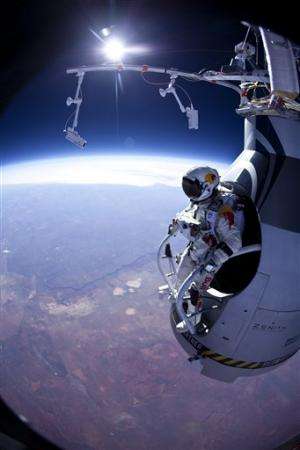
In this Thursday, March 15, 2012 photo provided by Red Bull Stratos, Felix Baumgartner prepares to jump during the first manned test flight for Red Bull Stratos over Roswell, N.M. On Monday, Oct. 8, 2012 over New Mexico, Baumgartner will attempt to jump higher and faster in a free fall than anyone ever before and become the first skydiver to break the sound barrier. (AP Photo/Red Bull Stratos, Jay Nemeth)
The 43-year-old former military parachutist from Austria plans to take off in a 55-story, ultra-thin and easy-to-tear helium balloon that will take him into the stratosphere for a jump.
He hopes it will make him the first skydiver to break the sound barrier and shatter three other world records.
Watch it live:
Copyright 2012 The Associated Press. All rights reserved. This material may not be published, broadcast, rewritten or redistributed.
Citation:
Skydiver begins prep for supersonic jump: Watch it live (2012, October 9)
retrieved 24 April 2024
from https://phys.org/news/2012-10-skydiver-prep-supersonic.html
This document is subject to copyright. Apart from any fair dealing for the purpose of private study or research, no
part may be reproduced without the written permission. The content is provided for information purposes only.