Trout will become extinct in the Iberian Peninsula in less than 100 years: study
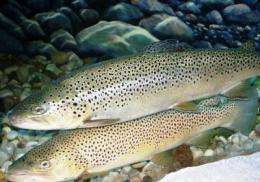
Climate change, pollution, the extraction of water for irrigation and overfishing all threaten the survival of the common trout. This fish is very sensitive to changes in its environment and, according to the Spanish study, its habitat will have reduced by half by the year 2040 and will have completely disappeared from Iberian rivers by 2100, so its population will become extinct.
Global warming is threatening the existence of many fish species, especially those in the salmonid family, which are sensitive to temperature changes as they require clear and fresh water to live. According to the calculations of a study carried out at the Complutense University of Madrid (UCM), the habitat of the common trout (Salmo trutta) in the Iberian Peninsula will have practically disappeared by the year 2100.
Ana Almodóvar is a researcher and the lead author of the study published in the Global Change Biology journal. It deals with how variations in temperature affect trout population both now and in the future. "This fish has very narrow physiological margins in which it can live and is therefore a good indicator of the highest stretches of our rivers," as explained to SINC by the expert.
The scientists analysed the temperature records of Navarra between 1975 and 2007 and using a mathematical model they calculated the temperature of the region's rivers. "We saw a clear tendency of temperature increases, which was particularly marked around 1986," outlined Almodóvar. In addition, the team monitored the trout populations of 12 rivers in the Ebro basin and saw that an increase in temperature was associated with a decrease in trout populations.
The biologist points out that "measurements are exact and temperature records are for long periods of time." Therefore, thanks to the collected data, the scientists have been able to create their forecast of the state of the trout in the future.
"In the best of cases, which would involve just slight climate changes, the situation for the trout is disastrous," confirms Almodóvar. The study states that the temperature increases in Spanish rivers will cause the trout to lose half of its habitat by 2040 and become practically extinct by the year 2100.
According to the research team, these results can be extrapolated to other regions of the Iberian Peninsula and the Mediterranean, such as the Italian, Balkan and Anatolian Peninsulas. "The Mediterranean region is very vulnerable to climatic variations and to the decrease in water availability," she adds.
An unrecoverable loss
"It has always been thought that due to climate change trout populations in Southern European countries would be more affected than those in the North. But, a specific study was needed to confirm this notion," points out Almodóvar.
Trout in the Iberian Peninsula displays great genetic variability and it is considered a hot point of biodiversity in the whole continent for this species. The expert explains that "the Hispanic river basins are very ancient and acted as a refuge for Europe's fauna during the Pleistocene ice ages."
Scientists report that this variability is not only under threat by climate change but also because "over the years Spain's rivers have been repopulated with genetically different types of trout."
"There is much allochthonous gene contamination amongst the native population of these fish since over time eggs have been imported from fish farms instead of developing the specific and pure lineage of each basin," adds the researcher with much regret.
One of the greatest threats: fishing
The scientists confirm that due to pollution, the use of fresh water for irrigation and an increase in temperature, "the ecologic state of rivers is more and more precarious and nowadays there are only trouts at the river sources."
Furthermore, trout is a priority species in recreational fishing in Spain and represents a "very important" socioeconomic resource. Almodóvar outlines that there is more and more demand for trout fishing and studies have been warning of the problems of overfishing for years.
"A common characteristic of populations subject to recreational fishing is that there has been a decrease in the oldest specimens since they are captured for being the largest," concludes the expert.
More information: Almodóvar, A.; Nicola, G.G.; Ayllón, D.; Elvira, B. "Global warming threatens the persistence of Mediterranean brown trout," Global Change Biology, 18: 1549. DOI: 10.1111/j.1365-2486.2011.02608.x 2012
Journal information: Global Change Biology


