Flame cyber virus linked to more malware: report
Sep 17, 2012
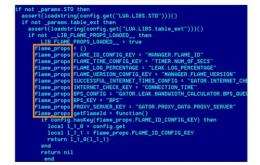
A Flame computer virus program is pictured in this screen grab released by Russian security firm Kaspersky Lab. The Flame virus believed to be part of a cyberwarfare effort against Iran was developed as early as 2006 and is linked to at least three other malware programs, a new analysis said Monday.

The Flame virus believed to be part of a cyberwarfare effort against Iran was developed as early as 2006 and is linked to at least three other malware programs, a new analysis said Monday.

The report suggests that the effort to develop Flame, widely reported to be part of a US-Israeli effort to slow Iran's suspected drive, has been going on longer than initially believed and has more components, including some not yet fully understood.

The report by the Russian Kaspersky Lab with US-based Symantec, Germany's computer emergency response team and the 's cybersecurity arm showed that development of the Flame platform dates back to 2006.

An earlier analysis by Kaspersky had reported the code for Flame, which is likely related to Stuxnet and other viruses, was written in 2009.

Kaspersky said the latest analysis shows that "at least three other Flame-related malicious programs were created" but added that "their nature is currently unknown."

It added that "one of these Flame-related unknown malicious objects is currently operating in the wild."

A Kaspersky statement said development of Flame's Command and Control platform started "as early as December 2006" and was "disguised" to hide its true purpose.

A security blog post by Symantec said that Flame was designed in a way to delete any effort to find its source.

"The systems were configured to disable any unnecessary logging events and entries in the database were deleted at regular intervals," the posting said.

"Existing log files were securely deleted from the server on a regular basis. These steps were taken in order to hamper any investigation should the server be acquired by third parties."

Flame previously has been linked to Stuxnet, which was designed to attack made by German industrial giant Siemens and commonly used to manage water supplies, , and other .

Most Stuxnet infections have been discovered in Iran, giving rise to speculation it was intended to sabotage nuclear facilities there. The worm was crafted to recognize the system it was to attack.

Some reports say US and Israeli intelligence services collaborated to develop the computer worm to sabotage Iran's efforts to make a nuclear bomb.

Explore further: US, Israel made Flame virus to thwart Iran: report

add to favorites email to friend print save as pdf

Related Stories

Flame virus linked to Stuxnet: researchers (Update 2)

Jun 11, 2012

The Flame computer virus which has been raging in the Middle East has strong links to Stuxnet, a malware program widely believed to have been developed by the United States or Israel, a security firm said Monday.

Symantec warns of new Stuxnet-like virus

Oct 19, 2011

US security firm Symantec has warned of a new computer virus similar to the malicious Stuxnet worm believed to have preyed on Iran's nuclear program.

Iran says Duqu malware under 'control'

Nov 13, 2011

Iran said on Sunday it had found a way to "control" the computer malware Duqu, which is similar to Stuxnet virus which in 2010 attacked its nuclear programme and infected more than 30,000 computers.

Malware hunter Kaspersky warns of cyber war dangers

Jun 06, 2012

The Russian malware hunter whose firm discovered the Flame virus said Wednesday there could be plenty more malicious code out there, and warned he feared a disastrous cyber attack could be coming.

Recommended for you

A year on, Assange stays put in Ecuadorean Embassy

35 minutes ago

A year ago, Julian Assange skipped out on a date with Swedish justice. Rather than comply with a British order that he go to the Scandinavian country for questioning about sex crimes allegations, the WikiLeaks ...

Google asks US secret court to lift gag order (Update)

12 hours ago

Google on Tuesday sharply challenged the U.S. government's gag order on its Internet surveillance program, citing what it described as a constitutional free speech right to divulge how many requests it receives ...

Mysterious Facebook event sparks online buzz

Jun 17, 2013

A mysterious Facebook event set for Thursday has sparked buzz that the leading social network could be adding video to Instagram smartphone picture-sharing service.

Report of British hacking raises hackles abroad

Jun 17, 2013

A newspaper report that British eavesdropping agency GCHQ repeatedly hacked into foreign diplomats' phones and emails has prompted an angry response from traditional rival Russia and provoked demands for ...

Explainer: What is a virtual private network (VPN)?

Jun 17, 2013

Have you ever wanted to exist in more than one place at the same time? The laws of physics suggest wormholes through space and time are hypothetical; but wormholes do exist in cyberspace and wonders can be ...

User comments : 1

Adjust slider to filter visible comments by rank

Display comments: newest first

defactoseven
not rated yet Sep 18, 2012
I love it when they say "some reports say". Why don't they say "we speculate that the US and... etc."

Some reports? what?

More news stories

Cape Wind gets $200M investment from Danish fund

The Cape Wind offshore wind project has secured a $200 million investment from a Danish pension fund in what the wind farm's president said Tuesday is a milestone for the long-delayed project.

New Zealand emerges as guinea pig for global tech firms

When Google chose New Zealand to unveil secret plans for a balloon-driven wi-fi network last weekend, it cemented the country's reputation as a test bed for global tech companies looking to trial their latest innovations, ...