Ice core reveals unusual decline in eastern Australian rainfall
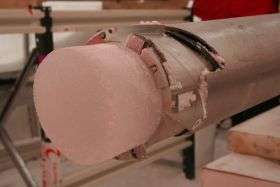
Researchers from the ACE CRC and the Australian Antarctic Division have found evidence from ice cores of a long term decline in average annual rainfall in eastern Australia, with records revealing that rainfall since about 1920 is below the average of the past 1000 years.
Australia's instrumental climate records extend back only about 100 years and show an apparent decline in eastern Australian rainfall. However rainfall in eastern Australia is highly variable, and the significance of the decline can only be assessed when compared with a much longer record.
ACE CRC glaciologist Dr Tessa Vance and colleagues from the Australian Antarctic Division (AAD) and UTAS have obtained the 1000-year record from ice core data. The research, published in Journal of Climate, shows a direct correlation between the instrumental eastern Australian rainfall record and sea salts deposited by winds at Law Dome in East Antarctica over the past 100 years. The 1000-year-old Law Dome sea salt proxy provides the longest rainfall record yet for eastern Australia.
"The El Niño-Southern Oscillation, or ENSO, climate mode predominantly drives rainfall in eastern Australia and is one of the factors that affects winds in the Southern Ocean," Dr Vance said.
Unlike many other continents, such as North America and Europe, Australia generally lacks suitable climate proxies (such as tree rings) for rainfall prior to the instrumental record. "We weren't expecting such a strong correlation between two areas this far apart. Normally proxy records come from the region that you are trying to describe," Dr Vance said.
The proxy record shows that the dry period since the 1920s is similar to a dry period from 1000-1260 AD. Scientists attribute both dry periods to either stronger or more frequent El Nino events. In El Niño-like years, summertime winds in the Southern Ocean are reduced, leading to lower than average concentrations of salts in the ice core. In La Niña-like years, the opposite occurs, with higher summertime winds causing higher concentrations of salts.
Dr Tas van Ommen leads the AAD Climate Processes and Change Program and is a co-author on the study. "This work builds on a 2010 study from the AAD which identified other mechanisms linking Antarctica with the drought in Western Australia, and it shows how important Antarctic climate studies are to understanding climate processes in Australia and the Southern Hemisphere," he said.
Future research will work towards understanding whether the current dry period had similar climate drivers to the period from 1000-1260 AD. The record will also be extended back another 1000 years, increasing understanding of the Australian climate for the past 2000 years.
More information: dx.doi.org/10.1175/JCLI-D-12-00003.1
Journal information: Journal of Climate
Provided by Australian Government


