Researchers tap into genetic reservoir of heat-loving bacteria
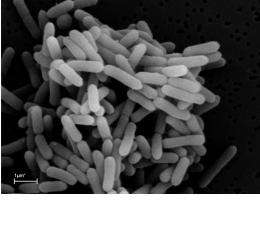
(Phys.org) -- The identification of key proteins in a group of heat-loving bacteria by researchers at the Department of Energy's BioEnergy Science Center could help light a fire under next-generation biofuel production.
Scientists have long been on the hunt for cost-effective ways to break down complex plant material such as switchgrass in order to access sugars that are fermented to make biofuels. Conventional processes involve the addition of commercially produced enzymes to break down the cellulose. BESC scientists are exploring alternative options, including the use of certain bacteria that are naturally capable of deconstructing plant biomass in their environment.
To better understand the mechanisms behind this microbial ability, a team of researchers from North Carolina State University, Oak Ridge National Laboratory and the University of Georgia analyzed the genomes of eight species of bacteria from the genus Caldicellulosiruptor. These bacterial species, found in globally diverse sites from New Zealand to Iceland to Russia, can degrade plant biomass at extremely high temperatures.
"Earlier, we had found that not all members of this group were able to equally degrade cellulose as others were," said NCSU's Sara Blumer-Schuette. "The main aim of this project was to figure what the true determinants were for strongly celluloytic bacteria from this genus — what made them celluloytic versus the others."
By comparing the genomes of eight related yet variable species, the research team pinpointed which genes were unique to species with the ability to break down cellulose. The researchers, whose results are published in the Journal of Bacteriology, conducted additional analysis using proteomics to verify how these particular genes are expressed into proteins that perform cellulose degradation.
The team's research uncovered a previously uncharacterized group of proteins determined to be adhesins, which help the bacteria grab onto a chunk of plant material to more efficiently break it apart. This finding further clarified why certain bacterial species in the genus are better than others at deconstructing plant material.
"Previously, we knew these bacteria would secrete enzymes that would then freely diffuse into their environment," Blumer-Schuette said. "We assumed that the enzymes would by chance stick to either cellulose or a piece of biomass in their environment and start to degrade it. Now we're seeing that a lot of proteins are involved in maintaining a tight interface between the bacterium and cellulose."
A key challenge in making the production of lignocellulosic biofuels cost-effective is improving the efficiency of access to the sugars imprisoned in a plant's cell wall.
"Yet nature, in the form of the microbes described here, has been doing this very effectively all along," said Paul Gilna, director of BESC, of which the authors are members. "If we can understand the processes already in place with cellulose-degrading organisms such as the Caldicellulosiruptor microbes described here, we can make huge leaps in learning how to harness microbes to digest plant biomass and ferment sugars into biofuels at the same time."
More information: Coauthors of the article, which has been published online by the Journal of Bacteriology, include NCSU's Sara Blumer-Schuette, Jeffrey Zurawski, Inci Ozdemir and Robert Kelly; ORNL's Richard Giannone, Scott Hamilton-Brehm, James Elkins, Frank Larimer, Miriam Land, Loren Hauser, Robert Cottingham and Robert Hettich; and UGA's Qin Ma, Yanbin Yin, Ying Xu, Irina Kataeva, Farris Poole and Michael Adams.
Journal information: Journal of Bacteriology
Provided by Oak Ridge National Laboratory


