May 24, 2012 report
Pair call for public discourse on treating wastewater contaminated with birth control pill chemicals
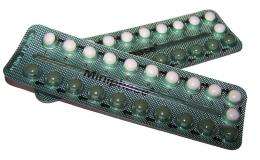
(Phys.org) -- As people go about their daily lives, it’s easy to overlook the impact their lifestyle has on the environment. Resources are used and as a result of their use, certain elements are placed back into the environment, some of which many people may not even think about. One of these is what happens to chemicals we take in after our bodies finish with them? Some are breathed into the air though most are flushed down the toilet after being deposited into our feces and urine. Workers at waste treatment facilities could point out chemical ingredients found in shampoos, for example, or those used in the production of food for another and most particularly drugs that we take to keep our various ailments at bay.
One class of drug in particular has many environmentalists concerned; those that are found in birth control pills. One such ingredient in the “pill” is ethinyl estradiol, which is a type of estrogren. In people, it helps prevent pregnancy, in other organisms, however, it might cause problems with the development of sexual organs leading to infertility or birth defects. This is possible because when wastewater is treated before being dumped back into an ocean, lake or river, no attempt is made to remove this particular chemical. And that is why a college professor and a ecotoxicologist have teamed up to write a paper (published in the journal Nature) suggesting that a public discourse on the matter be held before public officials decide whether to dedicate funds to cleaning such drugs from wastewater, or not.
Millions of women the world over take the pill every day; its development and use has given modern women the freedom to make choices their ancestors never dreamed of. But as with most advances in science, there is a price to pay and it can be found in the possibility of intersex fish and other amphibians that live in habitats close to where effluent from wastewater treatment facilities is pumped. The emphasis is on the possibility of it happening though, as thus far, it has not been proved that this occurs outside of testing labs.
In their paper, Richard Owen and Susan Jobling argue that decision-making regarding expenditures to clean such chemicals from wastewater should follow a public discourse. This is in response to the announcement that the European Parliament legislative committee is set to decide whether to recommend to the full Parliament, allocating some €35 billion for cleaning the chemical from wastewater across Europe, in November. They don’t believe such an important issue should be addressed and decided in private, without input from non-invited scientists or those that will be footing the bill, i.e. regular people.
They say whatever decision is made will likely set a precedent, which other countries are sure to follow, which makes it all the more important that as many voices as possible be heard.
More information: Environmental science: The hidden costs of flexible fertility, Nature 485, 441 (24 May 2012) doi:10.1038/485441a
Urgent public debate is needed over a European proposal to regulate environmental levels of the active ingredient in birth-control pills, say Richard Owen and Susan Jobling.
Journal information: Nature
© 2012 Phys.Org


.gif)


