NASA Space Network to begin new design phase for ground segment
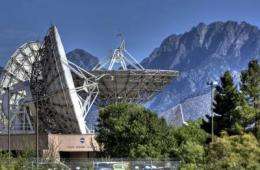
The Space Network Ground Segment Sustainment effort successfully completed its Key Decision Point - B review at NASA allowing the project to proceed into Phase B of its lifecycle, the Mission Definition Phase. During this next phase, lasting approximately eight months, the network will hold its Preliminary Design Review and complete additional project planning.
Approval to move forward was granted during a recent Agency Project Management Council meeting at NASA Headquarters, Washington, chaired by William Gerstenmaier, associate administrator for the Human Exploration and Operations Mission Directorate (HEOMD).
"Completing Key Decision Point - B (KDP-B) is a major achievement and reflects the fact that we have a very capable team in place," said Roger Clason, Space Network Ground Segment Sustainment (SGSS) Project Manager at NASA's Goddard Space Flight Center, Greenbelt, Md.. "It was gratifying to see, at all levels of management, recognition of SGSS's importance to the future of NASA's space communications capabilities," he said.
SGSS's development and implementation of next generation space communications ground terminals is part of an overall effort to sustain NASA's Space Network. The SGSS Project Office at NASA Goddard manages the development effort for the ground terminals. The SGSS Program Office is located at the Space Communications and Navigation office within HEOMD at NASA Headquarters. Operation of the network is the responsibility of the Space Network Project at Goddard.
SGSS is updating NASA's Space Network ground communications infrastructure with new, state-of-the-practice technology. These upgrades involve the installation of an entirely new architecture in each Tracking and Data Relay Satellite System (TDRSS) ground terminal, which enables easier technology refreshes, simplified future expansions, and an increase in customer data rate capabilities, while lowering operations and maintenance costs. Furthermore, SGSS is developing the architecture to allow for extensibility and expandability, enabling the network to continue to grow after the SGSS initial delivery is complete.
First implemented in the early 1980s and refreshed in the mid-1990s, the TDRSS ground terminal hardware and software is old and increasingly difficult and expensive to sustain. These factors pose substantial risk to the extremely highly reliable service that has been provided to Space Network customers for over two decades.
The SGSS Project has the responsibility to refurbish the three existing Space Network ground terminals at the White Sands Complex in New Mexico and in Guam. In addition, SGSS will build a new terminal at Blossom Point, Md.
To complete KDP-B, SGSS accomplished a number of milestones and tasks, the most significant being the Systems Requirements Review in July 2011. During the review, the project was commended for having a well-integrated and extremely knowledgeable team, comprised of the NASA project team and the contractor team, General Dynamics C4S, Scottsdale, Ariz. and associated subcontractors.
"Successful completion of Phase B of the project is the next step before we finalize the designs for the project and begin implementing the systems," said David Jacintho, SGSS Deputy Project Manager for Resources at NASA Goddard. "In this next phase, we will begin to develop the system moving forward through critical design. Once operational, the system will provide state-of-the-practice technologies and services to users of NASA's national resource for decades to come," Jacintho said.
SGSS's new architecture is expected to be fully operational by the end of 2016.
Provided by NASA's Goddard Space Flight Center


